While the Tang period lasted from 618 until 907, it is known that the ethnic Han Chinese consisted of a majority of the population and that the dynasty’s territory spread throughout mainland China. Given that Buddhism was very prominent during this time period, the Emperor of the dynasty, Xuanzong, was known as a 7th century month. As the “Tang state was a highly bureaucratic regime,” its history was closely documented and scholar-officials have produced lots of written materials that have influenced the “development of Tang studies” (2). The documents have noted many essential aspects of Tang China and the “largest cache of such documents comes from the so-called ‘Library Cave’ in the Mogao Caves near Dunhuang” which is a “site of Buddhist worship in easter Xinjiang” (2). The documents provide insight into the historical significance of the empire, as well as its social structure, economic standing and political influences.
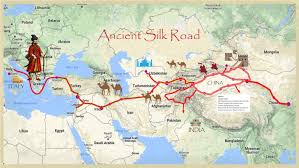
While Tang China is known for having complex foreign relations, the Silk Road serves a great importance in the trade network that exists between Tang and Central Asia. In The Silk Road : A New History with Documents, “Xuanzang’s itinerary underscores the important place of Turfan on the Silk Road. Along with Kucha, it was one of the largest cities in the Western Regions” (5). Xuanzang’s trip was so unique in that he traveled alone because most typically travel in caravans along the northern route. The population of Turfan itself consisted of migrants from both China and Sogdiana. “When the southern route fell into disuse after 500, many travelers opted for the northern route that went through Turfan” (2). Turfan was a popular place for settlement because the migrants had a desire to learn Chinese. Furthermore, the Turfan discarded paper and official documents to make clothing and items for the dead and graveyards consisted of numerous documents. The documents, as well as coins, contributed to the establishment of Turfan’s trading partner as the Iranian world. In addition to trading, the “Sogdians living in Turfan pursued a wide variety of occupations including cultivating the land, serving as soldiers, running inns, painting, working leather, and selling iron goods” (10). They also employed the common Chinese burial practices.
Works Cited
Slide deck (Gdrive link)
D’Haeseleer, Tineke. “Tang China (618-907).” In Bloomsbury Encyclopedia of the Global Middle Ages, edited by Erik Hermans. Arc Humanities Press, Bloomsbury Publishing, 2019.
Hansen, Valerie. The Silk Road : A New History with Documents. New York: Oxford University Press, 2017.(PDF)
