The Symbolic and Spiritual Meaning of Jade

As a fashionable gemstone known for its rich heritage, jade has held a special place in Chinese history. Known for its aesthetic beauty, as well as its practical use and social value, jade is significant to many cultures, especially that of ancient Central America.[1] The Chinese definition of jade, “yu,” translates to “any stone suitable for carving” which demonstrates how it was laboriously carved and polished into a variety of objects ranging from personal ornaments to objects for ritual and ceremonial purposes, as well as for burials.[2] This unique gemstone is characterized by its extraordinary color combinations and extreme toughness. Jade was classified as either nephrite, known as traditional jade, or jadeite, introduced in the late 18th century. While the most significant jade mines are located in northern Burma, known as modern Myanmar, they have also been found in Guatemala, California, Japan and Switzerland.[3] As jade was excavated from both mountains and riverbeds, it is considered by Chinese philosophers as the “stone of heaven,’’ and therefore holds a significant metaphorical value which extends beyond its monetary worth and materiality.[4]
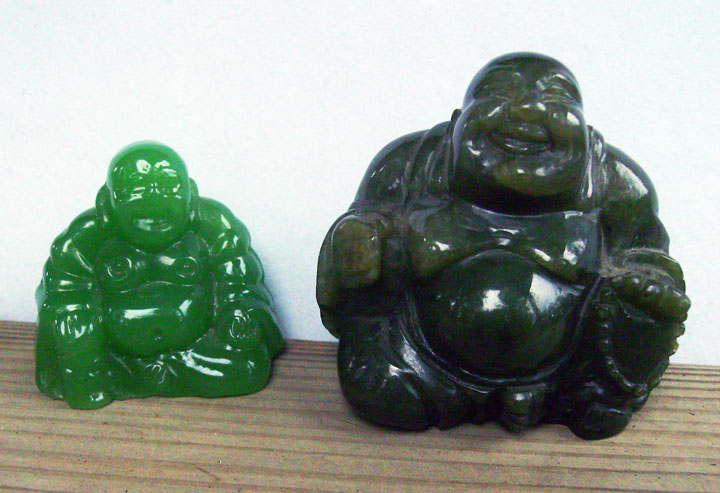
Jade was classified as either nephrite, known as traditional jade, or jadeite, introduced in the late 18th century. The jade buddha on the left consists of jadeite (lime green). The jade buddha on the right consists of nephrite (dark green).
The jade buddhas exhibit the difference between jadeite and nephrite. The jade buddha on the left consists of jadeite (lime green), whereas the jade buddha on the right consists of nephrite (dark green).
https://www.wirejewelry.com/jewelry-making-blog/5308/gem-profile-jade/

The use of jade as an ornamental object originated in the Early Neolithic period in 7000–5000 BCE in the Hemudu culture in Zhejian Province. As that period progressed, jade was first employed for ritual purposes, as the Liangzhu culture produced large, finely worked ritual jades, commonly incised with the taotie motif.[5] The carving process advanced during the Shang dynasty, wherein ritual jades persisted, including ceremonial weapons and fittings for bronze weapons, that continued into the Zhou dynasty.A notable transition took place during the end of the Chou period. Jade assumed a “more worldly use” as its religious significance diminished and it began to hold a more prominent ornamental use.[6] Quicker and larger scale production was introduced in the Han Dynasty, causing an abundance of jade found during archeological excavations. Although ritual jades continued to be produced in its traditional form, their quality dramatically declined. Instead, jade burial suits held a greater precedence.[7] Sculptures were very common, especially of animals, which were quite rare in earlier periods.[8] Given that the carving techniques remained the same between the Han Dynasty and 18th century, it is often difficult to date the origin of jade.[9] Thus, the variety of jade uses, as well as its symbolic meaning, are what differentiates the works of art in Chinese material culture.

As archeological artifacts of jade were used in a variety of ceremonial and ritual events, including burials, its versatility truly illustrated its uniqueness. Ritual jades were known for taking on several oblong forms, including hoe blades, flat axes, trapezoid blades, and scep­ter shaped blades. The “ceremonial jade most frequently mentioned in the texts is the kuei, called an oblong tablet, the insignia of the ruler.”[10] While the kuei symbolized the rulers’ right to rule, emperors used it in sacrificial ceremonies to demonstrate homage to the East. The Ts’ung was an early ritual jade that took the form of an eight cornered cubed tube, but was not characterized as a burial jade. Similarly, “Chou Li merely says that with the yellow ts’ung the Emperor pays homage to the Earth, that it is a symbol of authority.”[11] As jade ring discs were distinguished ritual objects, paying homage to heaven, they consisted of three types according to their perforation and width: pi, yuan and boon. While the pi was known for holding utmost importance, the yuan and boon were typically found in tombs.[12] More specific burial jades included mouth amulets, eye covers and other tubes and plugs designated to preserve the deceased. In addition to the mouth amulet serving as a royal gift, royal nobles were gifted with the privilege of being buried with jade shrouds.[13] Jade pendants and amulets symbolized rank as emperors often wore hairpins and jade earrings during offerings made to their ancestors. Pendants were often strung onto ceremonial headgear and courtiers wore girdle ornaments of jade that hung on chains. Holding an akin ornamental significance, “articles of personal use such as seals, garment- and belt-hooks, belt plaques, hat ornaments, garment-rings and jangles, comb-tops, earrings and similar objects” were made of jade.[14]
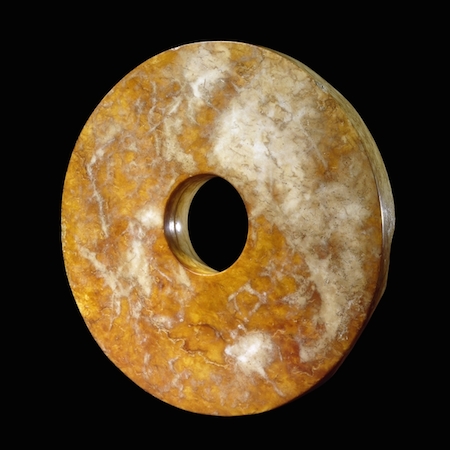
Two distinct ritual jade objects existed, one of which was a disc and was later known as a bi. The other is not pictured, but is a tube known as a cong. These discs were found carefully laid on the bodies of the dead in tombs of the Hongshan culture.
https://www.khanacademy.org/humanities/art-asia/imperial-china/neolithic-art-china/a/jade-cong-and-bi

As exhibited in ritual jades, Ts’ung, and ring discs, numerous ceremonial and sacrificial jades demonstrated homage to the natural world or a higher authority. Not only did the exquisite gemstone satisfy the duty to pay respect, but it symbolized high rank, lasting throughout the Han dynasty in oblong wands and tablets, tomb reliefs, and monuments that featured officials with badges. Some jade pendants were “sewn to the bonnet as a sign of rank.”[15] As jade was accepted as a symbol of virtue, jade pendants were known for symbolizing virtue by eradicating thoughts of little significance. Correspondingly, the clanking of courtiers’ girdle ornaments of jade embodied virtue. Because jade was known for its auspicious meaning, it gained widespread recognition as a symbol of prosperity and longevity. While the carving techniques created in the Neolithic period remained unchanged, in the Qing dynasty (1644-1912), “favorite subjects for hardstone carvings were fruits and vegetables, often functioning as rebuses that conveyed wishes for prosperity, longevity, good fortune, perpetuation of a family’s line, or even academic success.”[16] Smaller jade objects were often offered as tokens or gifts amongst friends, seen as spreading good luck. These smaller objects resembled various animals such as birds or fish, as well as deer (lu) which symbolized prosperity.[17] Burial jades were greatly esteemed as they promoted longevity by preserving the dead and combating sickness. It was commonly known that burial jades prevented disintegration and, therefore, “a corpse whose orifices were stopped with jade was not supposed to decay.”[18] For example, the “Stylized pig,” made in the Han Eight Cut style, was from the Eastern Han dynasty.[19] This burial jade, known both for its chiselled surface and great detail, was placed in the hands of the dead in their tombs. The “Stylized pig” fostered a sense of longevity as jade burial suits were “possessed of some magical property, which helped to preserve the body, and this was apparently the reason for the jade burial suits.”[20]Jade also took on a more spiritual meaning through its extensive use of animal motifs. Dating back to the first two millennia of Chinese culture, “jade was thought to be of super­natural origin, an emanation of streams and mountains, something created by the forces of nature, born within the earth and endowed with transcendental qualities.”[21] Confucius further enhanced jades’ symbolism and spirituality, as well as its great virtue and eternal significance.
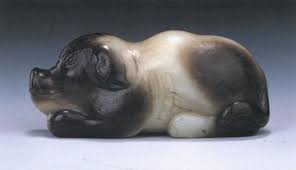
The "Stylized Pig" is a burial jade made in the Han Eight Cut style from the Eastern Han dynasty.
The “Stylized Pig” is a burial jade made in the Han Eight Cut style from the Eastern Han dynasty.
https://link.springer.com/chapter/10.1007%2F978-1-4615-3922-3_7

For some four thousand years, Chinese jade was held to a “higher esteem than gold or jewels.”[22] Over time, jade was increasingly associated with moral ideas of purity and goodness. While the five virtues established by Hu Shen in 100 A.D. have endured, charity, rectitude, wisdom, courage and equity continue to capture the significant meaning of jade. As a means of providing homage, gift giving, portraying high status, and aspiring for prosperity and longevity, jade’s symbolism was invaluable. Consistent with Confucius’ belief that jade would be used for centuries as the most desired stone, jade continued to “contain the essence of life, virtue, and eternity.”[23] Because of its symbolic and aesthetic worth, as well as its holistic value, jade was a treasure of Chinese culture.


[1] Roger Keverne, “Jade: A Special Gemstone,” in Jade, (New York: Springer Science Business Media, 1991), p. 22.

[2] Ibid.

[3] Ibid., p. 24.

[4] Ibid., p. 20.

[5] Elizabeth Lyons. “Chinese Jades,” Expedition Magazine, Penn Museum, last modified 1978, http://www.penn.museum/sites/expedition/?p=4268.

[6] Ibid.

[7]  Roger Keverne, “Han to Song Chinese Jades” in Jade, (New York: Springer Science Business Media, 1991), pp. 114-115.

[8] Ibid., p. 120.

[9] Ibid., p. 114.

[10] Lyons, Expedition Museum.

[11] Ibid.

[12] Ibid.

[13] Ibid.

[14] Keverne, “Han to Song Chinese Jades,” Jade, p. 116.

[15] Lyons, Expedition Museum.

[16] Jason Sun. “Chinese Hardstone Carvings,” Heilbrunn Timeline of Art History, The Metropolitan Museum of Art, last modified 2016, http://www.metmuseum.org/toah/hd/hard/hd_hard.htm.

[17] Lyons, Expedition Museum.

[18] Ibid.

[19] Keverne, “Han to Song Chinese Jades,” Jade, p. 115.

[20] Ibid.

[21] Lyons, Expedition Museum.

[22] Ibid.

[23] Ibid.

Keverne, Roger. Jade. Springer Science Business Media, 1991. https://doi.org/10.1007/978-1-4615-3922-3.

Keverne’s book, specifically “Jade: A Special Gemstone,” “Hang to Song Chinese Jades,” and “The Glorious Age of Chinese Jades,” include insight into the unique characteristics and properties of jade, jade, as well as its scientific nature. By exploring how jade evolved throughout the different dynasties in ancient Chinese history, the book describes specific items of jade that were used for a variety of purposes and held significant cultural and symbolic meaning. Keverne explains how jade was used not only as an item of trade, but also in rituals and burials, as well as in sculptures and personal ornaments. Keverne’s scholarly edition of Jade is very informative as it includes previous research and numerous relevant artifacts. I can use this resource to analyze how the various purposes of jade contribute to its symbolic meaning.

Lyons, .Elizabeth”Chinese Jades” Expedition Magazine 20.3 (1978): n. pag. Expedition Magazine. Penn Museum, 1978 Web. 28 Oct 2020 <http://www.penn.museum/sites/expedition/?p=4268>

Lyons’ expedition illustrates the ornamental use, as well as the religious significance of jade. Lyons traces jade’s origin in history and describes it as supernatural. Lyons brings the reader’s attention to ritual blades, ring discs, burial jades, jewelry and other objects of great importance. Lyons’ fascinating expedition revealed archeological evidence that supports her findings of jade in these valuable objects throughout history. I can use this resource to draw connections to how jade was utilized in different fields.

Sun, Jason. “Chinese Hardstone Carvings.” In Heilbrunn Timeline of Art History. New York: The Metropolitan Museum of Art, 2000–. http://www.metmuseum.org/toah/hd/hard/hd_hard.htm (June 2016)

Sun’s museum expedition explores how jade compared to other exclusive hardstones in the history of China’s materialistic culture. Sun describes the art form of hardstone carving and how the practice allowed for economic growth and prosperity. As he introduces the craftsmen’s work, he highlights the aesthetic purposes, as well as auspicious meaning behind the objects. Sun’s resource consists of a great amount of information provided by the Metropolitan Museum of Art and British Museum, as well as other well regarded pieces of work. I will use the museum expedition to expand my knowledge of this emblematic art form.
Reflection on Western Collectors

Although I used my free pass for the initial post this week, I was particularly intrigued by reading about Chinese ethics, as well as Americans’ great appreciation for Japanese art. To begin with, after the Chinese Exclusion Act was passed in 1882, immigration of all Chinese labors was prohibited. The act was known as a significant turning point in the relations with Asian immigrants and their descendants. It brought light to how Chinese laborers were viewed as they arrived in large numbers to the U.S. and were known as either voluntary or coerced laborers during the mid 19th century.

Westerners were not aware of the strong foundation that the Chinese had in art. One reason that the historical context of a majority of the artwork was lost was because of the fact that a great quantity of prestigious pieces were seized and brought to non-native countries. My classmate, Alex, highlighted the fact that although this practice has raised greater awareness on the Chinese culture in different countries, it has put a damper on the historical significance which the pieces held as their relocation caused their value to be lost. While it is important for all countries to be educated on various cultures, I agree with Alex in that the artwork should remain in its native country in order for the owners to continue to pass down its significance to future generations. I am a strong believer that the origination of artwork should be greatly appreciated and commemorated.

While Americans were known for being attracted to the artistic components of beauty and aestheticism, they often took into consideration a piece’s appearance, as opposed to its historical value. My classmate, Jose, relayed that Americans highly regarded artwork that embodied “public virtues and other highly principled messages” (75). As Japanese art aligned with these values, featuring nature and the principle of virtue, they included a much greater amount of Japanese pieces in American museums, as opposed to Chinese art. While the passage of the act in 1882 could have potentially contributed to the Americans’ strong dislike of Chinese art, I was quite amazed by the fact that there wasn’t a tremendous distinction between the two art forms. As we have studied such beautiful, historically, as well as religiously significant art forms in the Chinese material culture, I still can’t believe the fact that Chinese artwork was not greatly cherished.

Three things I learned this week:

  1. The historical context of a majority of Chinese artwork was lost because of the fact that a great quantity of prestigious pieces were seized and brought to non-native countries.
  2. Americans highly regarded artwork that embodied “public virtues and other highly principled messages” and, therefore, they were very fond of Japanese artwork (75).
  3. Although Americans demonstrated their great preference of Japanese art over Chinese art, there was no significant distinction between the two art forms.

Works Cited

Metrick-Chen, Lenore. Collecting Objects/excluding People : Chinese Subjects and American Visual Culture, 1830-1900. Albany N.Y.: State University of New York Press, 2012.

Reflection on Chinese Collectors With a Focus on Ceramics

Traditional Chinese ceramics dated from the Song period are known for their historical significance, as well as their aesthetic beauty and elegance. While their origin is a determining factor of the value in which they hold, Ming dynasty buyers would take into account where and when specific pieces were made. During the Ming era, antiques were very prominent. It was commonly known that the “ceramics of the early Ming period, which were in the process of becoming raised from the status of mere luxury tableware to that of ‘antiques’, were identified by the ‘reign period’ of the emperor in whose time they were manufactured” (120). The Ming dynasty was also known for its shift to more contemporary work, as well as its valuable porcelain. My classmate, Tori, highlighted the that fact that the porcelain was very smooth and translucent and was typically white in color. As I analyzed the piece known as the “Jar With Dragon,” I would predict that Ming dynasty buyers would be intrigued by the traditional cobalt blue that makes the work unique.

In addition to the history in which specific pieces hold, the shapes and designs of the art work contributes to its great value. Ceramics often feature engravings with messages of different meanings. I think this practice is very unique because pieces could consist of hidden meanings that hold a great significance. In addition to the importance of the physical appearance of ceramics, the Ming dynasty buyers would inquire into how the specific pieces function and could be put to use. I am curious if the pieces that hold the most beauty serve just as great of functional purposes.

Three things I learned this week:

  1. The majority of ceramics dated from the Song period.
  2. The historical significance, aesthetic beauty and specific functions of traditional Chinese ceramics held great significance.
  3. The Ming dynasty was known for its valuable porcelain.

Works Cited

Clunas, Craig. Superfluous Things: Material Culture and Social Status in Early Modern China. Honolulu: Univ Of Hawai’i Press, 2016.

Draft: Outline and Paragraph

Jade Paper Outline

Introduction (Paragraph 1):

  • Special place jade holds in many civilizations
  • Great beauty and value in many cultures; significant to the culture of ancient Central America
  • Practical use and social value
  • Metaphorical value: purity, indestructibility
  • Define “Yu” (Chinese for jade); “means any stone suitable for carving” (22)
  • Composition of the gemstone (unique color combinations, extreme toughness, rarely faceted, semi-transparent);  “sensuous hues and exquisite colour patterns” (41) 
  • Distinct materials:  nephrite (soft, dark, “blackish green”) and jadeite (hard, “fine quality”, “intense medium green”; introduced in the late 18th century)
  • Location:  most significant jade mines are located in northern Burma (modern Myanmar) in Kachin Hills (24); also been found in Guatemala, California, Japan and Switzerland

Evolution of Jade (Paragraph 2):

  • Early Neolithic period- jade originated in the  Hemudu culture in Zhejian Province about 7000–5000 BCE
  • Late Neolithic period-  first jade was known to be employed for ritual purposes around 2,000 B.C.
  • Shang dynasty- carving process advanced; ceremonial weapons and fittings for bronze weapons; ritual jades (continued in Zhou)
  • Articles of personal use originated in the Warring States period
  • End of Chou period (500 B.C.)-  “jade takes on a more worldly use and the religious significance begins to diminish”
  • Han dynasty-  great amount of jades from archeological excavations; colors include  “black, yellowish-white, beige with brown flecks and greyish-green”; jade burial suits (magical property); sculptures were common (especially of animals)
  • Carving techniques stayed the same between the Han Dynasty and 18th century which makes it hard to date (114)
  • Used less jade from end of Han to Tang; Buddhism flourished and jade was not significant except in a few cups, ornaments and animal sculptures

Jade Objects (Paragraph 3):

  • Ritual blades: 
  • “ceremonial jade most frequently mentioned in the texts is the kuei, called an oblong tablet, the insignia of the ruler”
  • Oblong forms:  hoe blades, flat axes, trapezoid blades, and scep­ter shaped blades
  • Kuei symbolize the rulers right to rule; emperors use it in sacrificial ceremonies and demonstrate homage (respect) to the East
  • Ts’ung:
  • Early ritual jade; mysterious; eight cornered cubed tube
  • the Chou Li merely says that with the yellow ts’ung the Emperor pays homage to the Earth, that it is a symbol of authority”
  • Not typically buried
  • Ring Discs:
  • Three types:  “If the jade substance is double the width of the perforation it is called a pi, if the perfora­tion is double the width of the jade it is a yuan, and if the perforation and jade are equal it is a boon”; pi is most important; yuan and boon typically found in tombs
  • Pi are known as a symbol of heaven but its symbolism is not included in ancient texts
  • Pay homage to heaven
  • Some pairs in the late Chou period were known for symbolizing the sun and moon
  • Burial Jades:
  • Royal nobles were buried with jade shrouds
  • “the most common jade burial amulet and perhaps the earliest is one placed in the mouth”; it was known as a royal gift; the individual that inserts the amulet into the deceased person’s mouth must be of the same rank
  • Burial jades also feature pigs and boars; come in pairs or solid forms
  • Pendants/Amulets:
  • Emperor wore hairpins, as well as jade earrings; worn during offerings to ancestors
  • Courtiers wore girdle ornaments of jade that hung on chains
  • Pendants hung from the ceremonial head­gear
  • Smalling carvings consisting of representations of various animals
  • Personal objects:
  • “fittings for a man’s sword, small intricately carved pieces of jade for the pommel, scabbard slide and chape”
  • “articles of personal use such as seals, garment- and belt-hooks, belt plaques, hat ornaments, garment-rings and jangles, comb-tops, earrings and similar objects” were made of jade; jade-inlaid belts and garment-hooks, garment-rings and bangles originated in the Warring States period (116)
  • Hairpins and comb-tops originated in the Tang and Song dynasties

Symbolic Meaning (Paragraph 4):

  • Sacrificial and ceremonial objects; demonstrate homage (respect) and symbolize high rank (lasted throughout the Han dynasty; oblong wand/tablet, tomb reliefs and monuments feature officials with badges; some pendants were “sewn to the bonnet as a sign of rank”; the Chou Li merely says that with the yellow ts’ung the Emperor pays homage to the Earth, that it is a symbol of authority”)
  • Tokens and gifts (“small jades, frequently in the form of birds, fish, or animals, were gifts between friends, sometimes good luck tokens, or puns, such as deer (lu) meaning prosperity (lu)”)
  • Symbol longevity; known for preserving the dead and combating sickness (corpses would be saved from disintegration with the use of jade which blocked passages of the body; “A corpse whose orifices were stopped with jade was not supposed to decay”)
  • —“Favorite subjects for hardstone carvings were fruits and vegetables, often functioning as rebuses that convey wishes for prosperity, longevity, good fortune, perpetuation of a family’s line, or even academic success”
  • Symbol of virtue (clanking of courtiers’ girdle ornaments of jade; pennants symbolize virtue and eradicate thoughts of little significance)
  • Prominent use of animal motifs that explore the spiritual aspect of nature (“Birds are known as “messengers to the spirits and the living link between heaven and earth”; Fish were “used fresh or dried as a ceremonial sacrifice and was a symbol of fertility and abundant harvest”)
  • — During the first two millennia of Chinese culture, jade was thought to be of super­natural origin, an emanation of streams and mountains, something created by the forces of nature, born within the earth and endowed with transcendental qualities”
  • — “Confucius also said that jade was a white rainbow … a thing of heaven, and it was also of earth because it emanated from mountains and streams, and it was of the way of virtue because everyone honored it”; known to “contain the essence of life, virtue, and eternity”

Pieces of Jade (Paragraph 5):

  • Most studies are devoted to jade carving compared to other hardstones
  • “Elephant and two boys”:  jadeite sculpture of two playful boys riding on a gigantic elephant 
  • —Made during the Qing dynasty (1644–1911); 19th century
  • —Example of jade that holds an auspicious meaning:  “associates the phrase ‘riding the elephant’ (qixiang) with ‘blessing’ or ‘good fortune’ (jixiang)”
  • “Stylized pig”: “a pig of slender form in the Han Eight Cut style” from the Eastern Han dynasty (115)
  • —Chiselled surface, “stone is a pale celadon green jade”, very detailed (115)
  • –Ex. of a burial jade; pigs were placed in the hands of the dead in their tombs 
  • —Example of jade that promotes longevity:  “jade was possessed of some magical property, which helped to preserve the body, and this was apparently the reason for the jade burial suits” (115)

Conclusion (Paragraph 6):

  • Chinese have held jade to a “higher esteem than gold or jewels” for some four thousand years
  • Over time jade has increasingly been associated with moral ideas of purity and goodness
  • Five virtues established by Hu Shen in 100 A.D. have persisted; charity (bright/warm), rectitude (translucency), wisdom (purity; note when struck), courage (broken, not bent), equity (sharp edges)
  • Confucian believed precious stone would continue for centuries as the most desired decorative material and it held true that jade continued to “contain the essence of life, virtue, and eternity”
  • “jade is the only proper medium for gifts of great homage, or emblems of merit, or for the Seals of State used until the last Emperor of China”

Intro:

As a fashionable gemstone known for its rich heritage, jade has held a special place in many Chinese civilizations. Known for its aesthetic beauty, as well as its practical use and social value, jade is significant to many cultures, especially that of ancient Central America. The Chinese definition of jade, “yu,” translates to “any stone suitable for carving” which demonstrates how it was laboriously carved and polished into a variety of objects ranging from personal ornaments to objects for ritual and ceremonial purposes, as well as for burials (22). The unique gemstone is characterized by its extraordinary color combinations and extreme toughness. Jade was classified as either nephrite, known as traditional jade, or jadeite, introduced in the late 18th century. While the most significant jade mines are located in northern Burma, known as modern Myanmar, they have also been found in Guatemala, California, Japan and Switzerland (24). As jade was excavated from mountains and picked up from riverbeds, it is considered by philosophers as the “stone of heaven,’’ and therefore holds a significant metaphorical value which extends beyond its monetary worth and materiality (20).

Chinese Collectors with a Focus on Ceramics

As it is commonly known that the past shapes Chinese cultural production, ancient Chinese collectors were known for obtaining valuable objects essential to the Chinese materialistic culture. More specifically, objects included “bronzes and jades from the period up to the Han dynasty, certain types of ceramics from the Song period, and the special category of calligraphy and paintings from any era” (93). Not only were the vases of jade, bronze, and clay highly valued, but paintings made in ink were as well.

The majority of ceramics dated from the Song period. They were typically classified by ‘wares’. For example, “‘Guan ware’ is literally ‘Official ware’, supposedly manufactured in kilns under direct imperial control at the Southern Song capital of Hangzhou in Zhejiang province” and fancier ones included “‘Ge ware’, literally ‘Elder brother ware’, from a picturesque anecdote about a family of potters” (102). Certain types of ‘ware’ were characterized as “ancient” in order to differentiate them for the contemporary objects that were being produced (102). Not only was I intrigued by the labeling process, but the different contexts of the ceramic types that were known for having a positive or negative connotation. While the white porcelain of Dingzhou was known for having a positive context, the ceramic seals were known to lack any sort of worth.

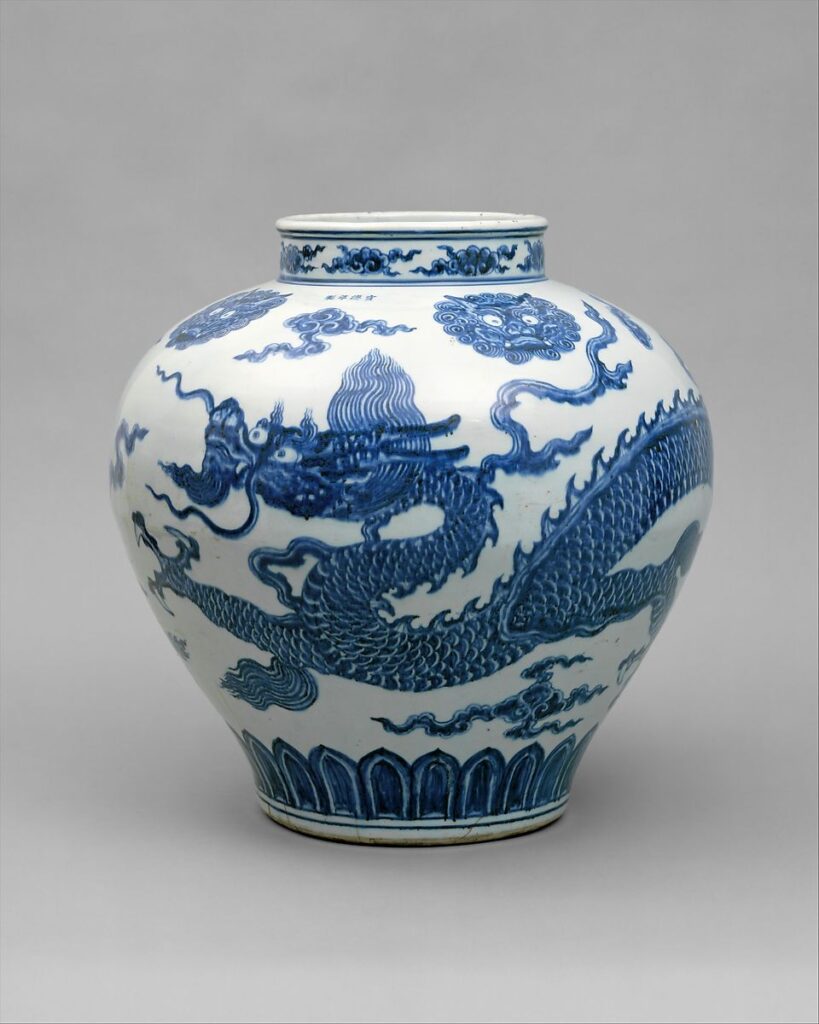
I chose to analyze the “Jar with Dragon” from 14th century China. This piece of porcelain from the Xuande period is painted with cobalt blue and has a transparent glaze. The painting on the jar “depicts a powerful dragon undulating through a sky defined by a few sparse clouds.” As this piece is porcelain, it is likely that it would be considered to have a positive connotation by Ming period buyers. It would also be noted that its medium is Jingdezhen ware which provides insight into its origination. The “Jar with Dragon” is an antique piece that the Ming period buyers would find of great interest and be curious as to how its Indo-Himalayan imagery was significant in history.

The "Jar with Dragon" from 14th century China is known as Jingdezhen ware and is painted with cobalt blue.

https://www.metmuseum.org/art/collection/search/39666

Works Cited

Clunas, Craig. Superfluous Things: Material Culture and Social Status in Early Modern China. Honolulu: Univ Of Hawai’i Press, 2016.

Reflection on the Artisans

Although I used my free pass for the initial post this week, I gained a lot of insight into the lives of the artisans through reading my classmates informative blog posts. During the Han and Qin dynasties, artisans were included in a rigid social hierarchal system that consisted of four occupational groups that originated from “the intention of rulers and administrators to divide and settle the population according to occupations and to monitor their numbers and activities” (2). More specifically, the four occupational groups included the officials, farmers, artisans and merchants. While the scholars and farmers were known for being ranked at the top of the hierarchy, the artisans and merchants were ranked secondary. My classmate, Jialin, raised awareness on the fact that the artisans lacked a reputation within the society and “were tolerated, despised, feared, and sometimes envied, but never truly respected or revered” (Barbieri, 38). I was particularly intrigued by the point that my other classmate, Tori, emphasized which was that the emperors often used and valued the items in which the artisans produced but hardly gave them credit. Just because the artisans were subordinates to them in the social hierarchal ladder, they never gave them the respect or praise that they deserved.

In addition, I found the guidelines that were used to determine individual’s rankings quite interesting. While they often referred to commonly accepted values to judge where people fit, they also inquired into their individual lifestyles. One guideline that my classmate, Tori, pointed out that caught my attention was the fact that members of the same social class were known to be acceptable for social interaction and marriage. In our country today, people often marry others who come from disparate backgrounds and hold job positions of various skill levels. Personally, I feel saddened by the fact that the society is so segregated based on the different rankings that exist and that individuals from the lower classes, such as the artisans and merchants, were often looked down upon.

Three things I learned this week:

  1. The social hierarchal system consisted of four occupational groups that included the officials, farmers, artisans and merchants. The artisans and merchants were known as secondary groups to the farmers and scholars.
  2. The guidelines that were used to determine individual’s rankings often referred to commonly accepted values, as well as individual’s lifestyles.
  3. The artisans lacked a reputation and hardly received credit for the valuable items they produced.

Works Cited

Barbieri-Low, Anthony J. Artisans in Early Imperial China. Seattle: University of Washington Press, 2007.

Moll-Murata, Christine. State and Crafts in the Qing Dynasty (1644-1911). Social Histories of Work in Asia. Amsterdam: Amsterdam University Press, 2018.

Reflection on Ceramics with a Focus on the Artisans

As Jingdezhen was known for producing the finest and whitest clay, this high quality clay originated in the Song and continued throughout the Yuan and Ming dynasties. The great amount of workers served the responsibility of shaping the clay into bowls and vases, as well as painting the cobalt and judging the temperature of the kilns (1). As it was a challenge to acquire workers capable of performing the high skilled labor, such complex labor was known to be very costly. The rates in which the workers were paid varied according to the level of the labor in which they were capable of performing. More specifically, those who produced the larger vessels were typically paid 0.03 tael and 5 copper cash (6). They also created bigger ceramic pots and took part in additional processes such as engraving and carving. On the other hand, “hired labourers who perform such tasks as beating and washing the cobalt [would typically] receive 25 copper cash (0.025 tael)” and those involved in lower skilled duties such as “cotton wadding, making frames and boxes or preparing paper received the lowest amount of money: a daily supply of 2.5 Chinese pints (sheng) of rice and 0.01 tael” (6-7). Although the lower skilled workers evidently made a drastically lower rate, they were more often hired in the labor force.

While all of the manufacturing processes were fulfilled through the use of kilns, responsible for firing ceramics, it is commonly known that the imperial kilns produced lower quality work in comparison to the private kilns. The fact that the work of the imperial kilns can be compared to an assembly-line production system and that the work itself was carried out to fulfill government obligations contributed greatly to its production issues. The difference in the quality of work between the imperial and private kilns demonstrated the need in which the imperial kilns had to retrieve aid from the private kilns and rely heavily on their coexistence. Personally, I am quite curious as to how this coexistence evolved. I am also intrigued by my classmate, Kristine’s preposition of why the private kilns lowered the quality of the objects they produced and invested less time in their production in order match the imperial kilns. The private kilns chose to prioritize assisting the imperial kilns over utilizing their great potential to their advantage.

Three things I learned this week:

  1. Jingdezhen was known for producing the finest and whitest clay that originated in the Song and continued throughout the Yuan and Ming dynasties.
  2. The workers in the labor force were paid according to their skill level. There were a greater amount of lower skilled workers in the labor force.
  3. Although the imperial kilns and private kilns coexisted, the imperial kilns were known for producing much lower quality work.

Works Cited

Ho, Soleil. “The Rich, Complex History Hiding Within Chinese Plate Designs”. Thrillist, June 10, 2019. URL: https://www.thrillist.com/eat/nation/chinese-plate-design-history 

Slides (Gdrive link)

Gerritsen, Anne. The City of Blue and White : Chinese Porcelain and the Early Modern World. Cambridge: Cambridge University Press, 2020.

Annotated Bibliography

Keverne, Roger. Jade. Springer Science Business Media, 1991. https://doi.org/10.1007/978-1-4615-3922-3.

Keverne’s book, specifically “Jade: A Special Gemstone,” “Hang to Song Chinese Jades,” and “The Glorious Age of Chinese Jades,” include insight into the unique characteristics and properties of the gemstone, jade, as well as its scientific nature. Through exploring how jade evolved throughout the different dynasties in ancient Chinese history, the book features specific items of jade that were used for various purposes and held significant meaning. Keverne exhibits how jade was used as an item for trade, in addition to its use in rituals and burials, as well as in sculptures and personal ornaments. Keverne’s scholarly edition of Jade is very informative as it includes previous research and numerous relevant artifacts. I can use this resource to analyze how the various purposes of jade contribute to its symbolic meaning.

Lyons, .Elizabeth”Chinese Jades” Expedition Magazine 20.3 (1978): n. pag. Expedition Magazine. Penn Museum, 1978 Web. 28 Oct 2020 <http://www.penn.museum/sites/expedition/?p=4268>

Lyons’ expedition illustrates the ornamental use, as well as the religious significance of jade. Through investigating the physical substance of the gemstone, Lyons traces the object’s origin in history and describes it as supernatural. Lyons brings the reader’s attention to ritual blades, ring discs, burial jades, jewelry and other objects of great importance. Lyons’ fascinating expedition consists of archeological evidence that supports her findings of jade in these valuable objects throughout history. I can use this resource to draw connections in how jade was utilized in different fields.

Sun, Jason. “Chinese Hardstone Carvings.” In Heilbrunn Timeline of Art History. New York: The Metropolitan Museum of Art, 2000–. http://www.metmuseum.org/toah/hd/hard/hd_hard.htm (June 2016)

Sun’s museum expedition explores how jade evolved amongst other exclusive hardstones in the history of China’s materialistic culture. Sun describes the art form of hardstone carving and how the practice allowed for economic growth and prosperity. As he introduces the craftsmen’s work, he highlights the aesthetic purposes, as well as auspicious meaning behind the objects. Sun’s resource consists of a great amount of information provided by the Metropolitan Museum of Art and British Museum, as well as other well regarded pieces of work. I will use the museum expedition to expand my knowledge of this emblematic art form.

Traditional Chinese Ceramics with a Focus on the Artisans

Pottery and porcelain are both objects known for being made from clay and for being fired at high temperatures. While the kilns used to make the objects required a various array of skills and differed in their quality, “the imperial kilns often did not succeed at producing enough items, both in terms of quantity and in terms of quality” (12). Therefore, the private kilns were able to benefit. However, ““in sixteenth-century Jingdezhen, the imperial kilns produced extraordinary porcelains” (1). These imperial kilns were known for producing porcelain that could be used during ceremonial events and rituals. The availability of natural resources at the time was responsible for determining the quality of the production. It is quite interesting that the different time periods dictated the kilns’ quality and production.

While “the workforce in Jingdezhen was made up of different constituencies,” they consisted of various artisans and craftsmen that worked for different amounts of time on different activities (2). The population was divided into households that were responsible for numerous labour duties. The individuals known as labourers were responsible for working with the kilns. Although there was an abundance of opportunities for the labourers, “the supply of such labourers to the imperial kilns formed part of the tax obligations that were imposed upon the county-level administrations in the region of Jingdezhen” (3).

The factories were known for hiring individuals that lacked a high level of skill and these workers typically worked on a temporary basis as their positions were seasonal. I am curious as to how the industry was affected because of the fact that it couldn’t operate during months when the temperature dropped to levels below freezing. Furthermore, it was difficult to find workers capable of performing the high skilled labor. The workers that performed such high skill labor were paid a greater rate. This practice is similar to how individuals today traditionally earn higher incomes for work that requires additional skills and experience.

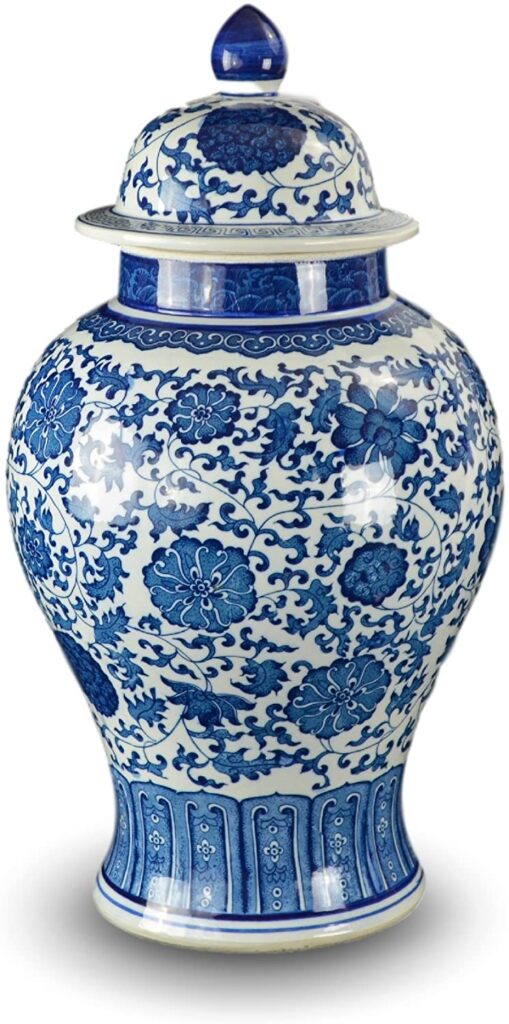
A blue and white porcelain ceramic floral temple ginger jar vase in the traditional Ming style that was made in Jingdezhen, China.
https://www.amazon.com/Classic-Porcelain-Floral-Temple-Jingdezhen/dp/B074P7N6FZ

Works Cited

Ho, Soleil. “The Rich, Complex History Hiding Within Chinese Plate Designs”. Thrillist, June 10, 2019. URL: https://www.thrillist.com/eat/nation/chinese-plate-design-history

Slides (Gdrive link)

Gerritsen, Anne. The City of Blue and White : Chinese Porcelain and the Early Modern World. Cambridge: Cambridge University Press, 2020.

Reflection on Inkstones of East Asia

Inkstones served a great influence on East Asia as they occupied “a conspicuous place in the early Qing political project” (3). Not only were emperors of the time very materialistic and would do anything to obtain certain materials, but the ink was used by members of the imperial family in their daily transactions. My classmate, Jose, emphasized that the materials were created under sophisticated craftsmanship and the emperors took action in hiring and recruiting experts to work for them. I think that the fact that emperors were for once not afraid of appearing too materialistic exhibits their dedication towards the objects and their utmost desire to produce the most ideal items. The Qing, Ming, and Song emperors spent a great deal of time supervising the making of different projects in art which further shows how much they cared about the material composition of the objects being made.

Inkstones were “most often made from specifically harvested stones, hewn from quarries to be designed, carved, polished, sold, commissioned, used to grind ink, washed, repaired, gifted, sold, stolen, collected, admired, studied, written on, written about, lost, and forgotten” (3). It is commonly known that the Duan quarries produced the highest quality inkstones which consisted of mica, clay and silica. As the process of creating inkstones requires lots of handiwork skills, Dorothy Ko, a well-known author famous inkstone maker herself, stresses the importance of producing the artwork firsthand in order to better understand the art form and adopt a personal aspect as fulfilling the role of a creator of the art form. The fact that there is limited information available about Ko supports the idea of the lack of visibility that the artisans had. I am curious as to if better insight on the creators of the material objects, as opposed to the commissioners, would allow us to learn more about the gender discrimination, as well as the social hierarchy that existed during the time period. I have noticed a common theme across the weeks of the minimal documented records of what occurred during history and I believe that this obscures the knowledge we have of the past.

Three things I learned this week:

  1. Early Qing emperors were very materialistic and put a lot of time and effort into supervising the making of different art projects.
  2. Duan quarries were known for producing the highest quality ink stones that consisted of mica, clay and silica.
  3. Men were known for fulfilling the retail work of the business, whereas women were responsible for making the inkstones.

Works Cited

Podcast: New Books in East Asian Studies, interview with Dorothy Ko, author of The Social Life of Inkstones.

 Ko, Dorothy. The Social Life of Inkstones : Artisans and Scholars in Early Qing China. A Study of the Weatherhead East Asian Institute Columbia University. Seattle: University of Washington Press, 2017.

css.php