The Tombs of Early China

In the Ancient Chinese culture, it was a common belief that everyone was deserving of a burial. If one did not have a burial, he could potentially become a ghost and haunt people with his spirit forever. Yellow Spring is where all mortal beings were sent after death and had the opportunity to reunite with their loved ones, as well as their enemies.

The original tombs were known to consist of “constructed architectural space containing mortuary structures, grave furnishings and above-ground landmarks” (7) and include two spatial/architectural complexes. Although these tombs were not written or spoken much about until modern archeology evolved in China in the 20th century, they do help us better understand Chinese art and visual culture.

Other tombs that evolved in Pre-Imperial and Early Imperial China were known for consisting of anthropomorphic and zoomorphic miniatures, as well as archeological models such as vehicles and edifices. The purpose of all tombs “was to create ‘underground homes’ so that the deceased could enjoy the amenities of their former lives in the hereafter” (20). Although there is a lack of information on how the figurines themselves originated as grave goods, they were known to have been first discovered outside of the Central Plain (zhongyuan) on the western side. Furthermore, the early tall wooden figurines were “strongly reminiscent of symbolic guards or servants” and the “painted tiny pottery miniatures depict scenes of everyday life: entertainment and livestock” (25). The status of the tomb occupants would determine how many figurines they received, as well as the complexity of their structures. It is quite fascinating how the wooden statuettes appear almost lifelike as they had facial features similar to those of humans.

Question: How is it determined that the figurines and models take the place of performing human sacrifices?
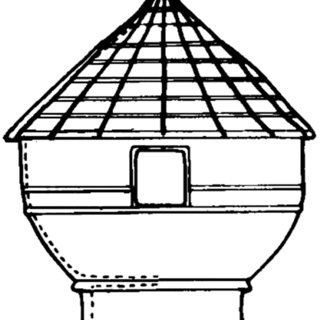
Shaanxi Province's ceramic model of a round granary that consists of a fancy, pointed roof.
https://web.b.ebscohost.com/ehost/pdfviewer/pdfviewer?vid=1&sid=48f95b12-86c0-417e-9f4d-d4b6dc6396ab%40pdc-v-sessmgr04

Works Cited

Hung, Wu. The Art of the Yellow Springs: Understanding Chinese Tombs. London: Reaktion Books, 2010. 

Selbitschka, Armin. “Miniature Tomb Figurines and Models in Pre-Imperial and Early Imperial China: Origins, Development and Significance.” World Archaeology 47, no. 1 (2015): 20-44.
Reflection on Shang Bronzes and Bones

As I focused on the exploration of the Shang dynasty’s bronze vessels this week, I further realized how the process of casting bronze is so unique and complicated, as well as very diverse in its entirety. The reason that it is very hard to particularly define the systematic process is because it is ““a continually changing composite of different animals, including humans” (22). The objects themselves offer the most information through their various human and animal characteristics, as well as their “close conceptual connection between hunting and sacrifice in early agricultural societies” (24). One of the most common uses of the bronze vessels is during ritual banquets in which wine is drank out of it. The incorporation of the bronze vessels during religious and ceremonial events reminds me of a common tradition in my religion in which we leave glass of wine for Miriam, the prophet, during Passover seders.

Furthermore, the bronze vessels were also used as “material resources collected for political gain” because of the fact that “religious divination as a ritual was closely tied with making political decisions” (Bensimhon, Rachel). The reason that the bronze vessels were produced in such great abundance was because of the fact that there was such a large amount of raw material available at the time. The modular technical system allowed for the production of such how quality vessels. Additionally, “unusual technique favored the development of a social system, the division of labor” and supports standardization and coordination with other laborers (Ledderose, Lothar).

Although I didn’t research the oracle bones, I found numerous parallels in reading from my classmates blogs, such as the fact that they were also used as rituals during ceremonial events. Both the bronze vessels and oracle bones were recovered mostly from the Anyang, Henan region. These two significant materialistic objects in history have both “added considerably to our views of the development of humankind in general” (26).

Things I learned this week:

  1. Bronze vessels were made to represent various tasks, in particular common rituals that took place during ceremonial events. The oracle bones were also used as frequent rituals.
  2. The bronze vessels and oracle bones represent the intersection between the artistic, the mythological, and the sociopolitical aspects that were so prominent in ancient Chinese history.
  3. The most discoveries of bronze vessels and oracle bones were in Anyang, Henan region. The objects themselves provide the most information about their origin and significance.

Works Cited

Keightley, David N. Sources of Shang History: The Oracle-Bone Inscriptions of Bronze Age China. Berkeley: University of California Press, 1978. 

 “Precious Metals: Animal-Shaped Bronze Vessels in the Shang-Dynasty Period.” In People and Their Stuff: A History of China in Objects Now Preserved in North America. 

Allan, Sarah. “The Taotie Motif on Early Chinese Ritual Bronzes.” In The Zoomorphic Imagination in Chinese Art and Culture, edited by Jerome Silbergeld and Eugene Yuejin Wang. Honolulu: University of Hawaiʻi Press, 2016. 

Ledderose, Lothar. “Casting Bronze the Complicated Way” Chapter 2 in Ten Thousand Things: Module and Mass Production in Chinese Art. The A.W. Mellon Lectures in the Fine Arts, 1998. Princeton, NJ: Princeton University Press, 2000.

The Historical Significance of Bronze Vessels in the Shang Dynasty

While many cultures are known for performing their own unique rituals, the Shang Dynasty of early China was known for introducing bronze vessels that were produced by artisans in 1600-1050 B.C. (Bensimhon, Rachel). Such precious artifacts were known for their prominent designs consisting of mythical creatures and their ideas were inspired by animal species, as well as new, distinctive creatures. The aesthetic works held numerous interpretations and were known for their diversity.

Not only were the bronze vessels designed for beauty, but they were designed to hold sacred value and for religious practices, as well as for political purposes. The motive of their designs was to “evoke an impression of something otherworldly” (Bensimhon, Rachel). Ancestral sacrifices during the late Shang period cultivated the “technologically sophisticated bronze-casting industry, which was devoted primarily to the production of vessels for the meat, grain, wine, and water used in ancestral sacrifices and ritual weapons, rather than more practical tools” (21). While various religions host ceremonial meals, the bronze vessels are a common ritual that were used in daily life. In addition, one fact that I found particularly intriguing was that humans were incorporated in the taotie motif. This makes me wonder if humans were physically sacrificed?

Furthermore, technology had an important impact in assisting the advancement of the designs of the bronze vessels. It allowed for them to be “consistently adorned with a two-eyed zoomorph, traditionally called the taotie” (22). As the taotie motif was produced in a significant amount of military equipment, as well as instruments and stone mortuary furniture, “the ritual function of the artifact rather than the medium in which it is made determined whether the taotie was an appropriate form of decoration” (27).

I found it very interesting learning about such precious artifacts that held such a historical significance in ancient times. I am curious to further investigate how the bronze vessels evolved over time and were incorporated into many ritual functions.

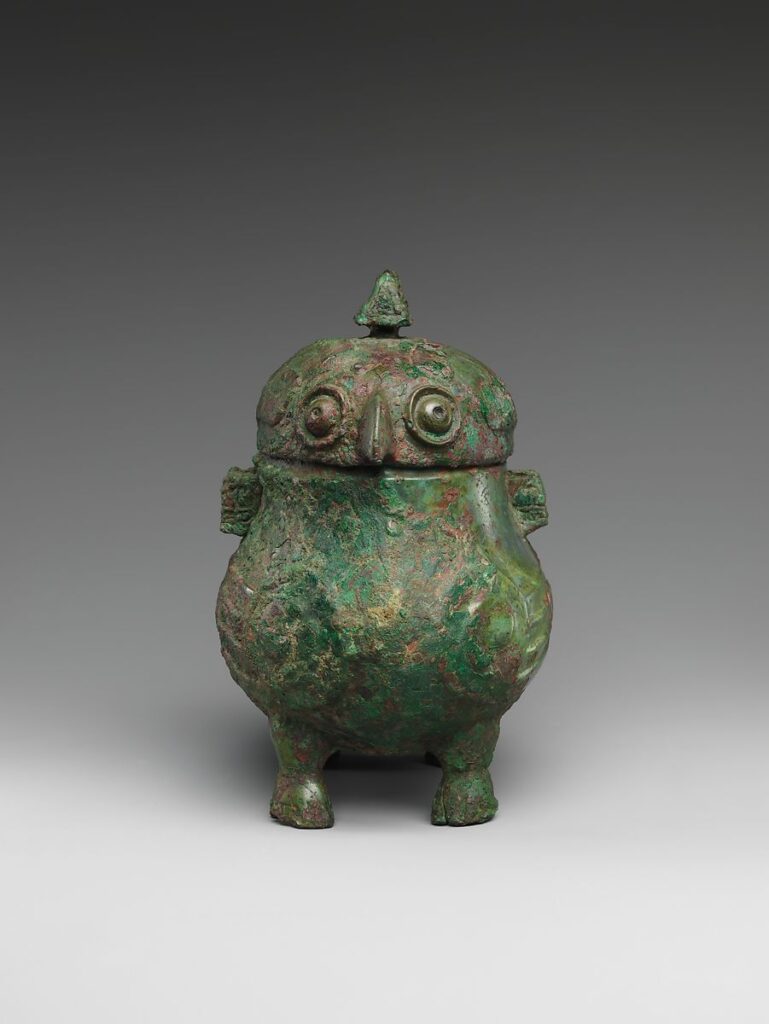
The Wine Cup in the Shape of Addorsed Owls is known as a zhi-type vessel that was designed to be drunk out of at ritual banquets.
https://www.pinterest.com/pin/546765211016351006/

Works Cited

Bensimhon, Rachel. “Precious Metals: Animal-Shaped Bronze Vessels in the Shang-Dynasty Period.” In People and Their Stuff: A History of China in Objects Now Preserved in North America. URL: http://scalar.tdh.bergbuilds.domains/hst137/precious-metals-animal-shaped-bronze-vessels-in-the-shang-dynasty-period

Ledderose, Lothar. “Casting Bronze the Complicated Way” Chapter 2 in Ten Thousand Things: Module and Mass Production in Chinese Art. The A.W. Mellon Lectures in the Fine Arts, 1998. Princeton, NJ: Princeton University Press, 2000. 

Allan, Sarah. “The Taotie Motif on Early Chinese Ritual Bronzes.” In The Zoomorphic Imagination in Chinese Art and Culture, edited by Jerome Silbergeld and Eugene Yuejin Wang. Honolulu: University of Hawaiʻi Press, 2016. 

Reflection on the History of the Great Wall

Although there is limited information about the origination of the “Great Wall”, research allows for more clarity about the history of the wall to be established. In ancient times, there were numerous walls created not only for defensive purposes to fortify the land, but for offensive measures to assert political and military control over territories. Expansionism was key to this offensive approach in order for Chinese northern states to “protect their political and economic penetration into [foreign] areas” (di Cosmo, 155). The walls were utilized for territorial growth in order to expand into the land of the nomads. Furthermore, the walls allowed for communication, as well as transportation to be accessible. While the military purposes of the walls were still essential, as well as preserving colonization, commercial development was also a very important aspect of the creation of the wall.

In addition, as numerous generations contributed to the reconstruction of the wall, Emperor Qin was responsible for ordering the existing fortifications to come together under one system (Waldron). This united system would transform into the prestigious wall that serves such a historical significance. Since the Warring States were already constructing walls, they were able to be used as a source of origin for the establishment of the wall.

Although I now have a much better understanding of the “Great Wall”, I still have a few questions about the unknown facts that still exist. While it is well-known that the walls weren’t shown in “traditional Chinese paintings” (Waldron) or in other documentation, I am curious whether this was done by choice or if they didn’t see a purpose in documenting its creation. If the wall was documented over time, more reliable sources would exist today in writing.

“Things I learned this week”:

  1. The walls were used for offensive strategies and to assert political and military control over different areas.
  2. The construction of the wall was built on the sorrow of many lower-class Chinese families.
  3. The walls were built after Chinese acquisition of nomadic lands with the purpose of incorporating new lands.

Works Cited

Waldron, Arthur. The Great Wall of China: From History to Myth. Cambridge Studies in Chinese History, Literature, and Institutions. Cambridge England: Cambridge University Press, 1990.

di Cosmo, Nicola. Ancient China and Its Enemies: The Rise of Nomadic Power in East Asian History. Cambridge, UK: Cambridge University Press, 2002.

The History of The Great Wall of China

The history of the Great Wall of China is way more complex than one could imagine. As one may assume that the project originated from a simple inspiration, the process of its creation over time lacks a single explanation.

While the Ch’in Dynasty built a Great Wall that laid the foundation for the current Great Wall, this new border defense system, as well as many fortifications don’t define a singular “Great Wall” similar to our modern conception of how it existed in the past. The concept of the “Great Wall” is very misleading as such a prominent monument stands today, which in reality is a “border wall built by Yang I-ch’ing, Yü Tzu-chün, Weng Wan-ta, Yang Po and others” (Waldron, Arthur).

As the storyline of the wall is quite confusing, numerous myths have evolved that share some perspective of what happened. For example, Meng Jiangnü’s legend which is a part of China’s tradition of folk songs, folk tales and dramas in literature. Meng Jiangnü is known as “the widow whose lamentations toppled the structure for a length of 800 li” (Bruce G. Doar). Although the interpretation of the legend has changed over time, it allowed for it to transform into both a folk tale and a scholar’s tale. One major aspect that changes amongst the different versions of the legends is Meng’s lamentations of the mountains and walls and how her mourning led to her lament of the great walls of Qi and Qin. Her lamentations not only influenced the customs of the state of Qi and the Zibo area, but inspired their reconstruction.

Studying legends in their historical context allows the structure of the society that existed in ancient times to truly be further investigated. While there is so much unknown about the walls, exploring different myths allows for a better idea of the history and preservation of the Great Wall to be cultivated. I am still curious if there is a more unified explanation on how the creation of the wall began.

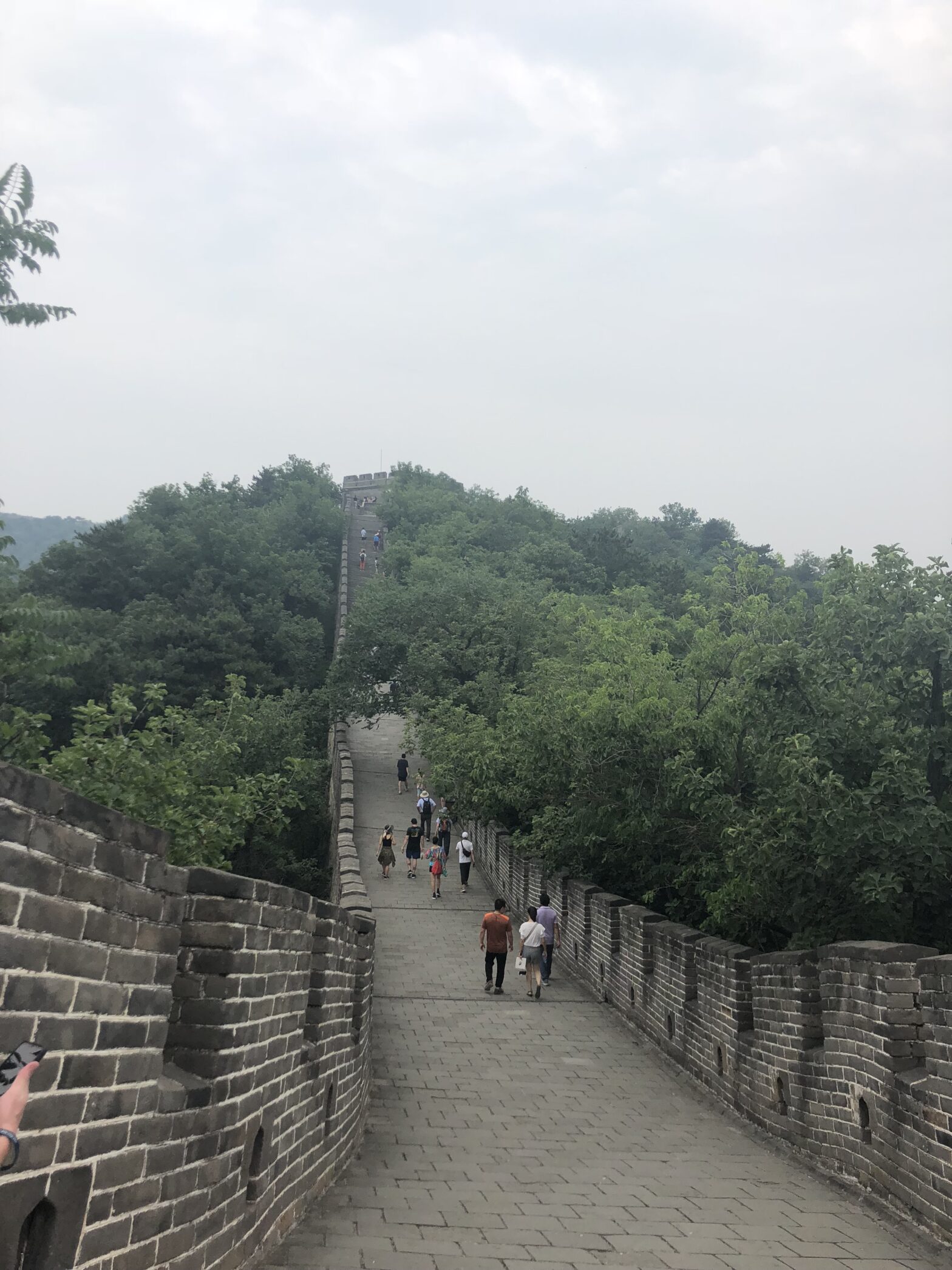
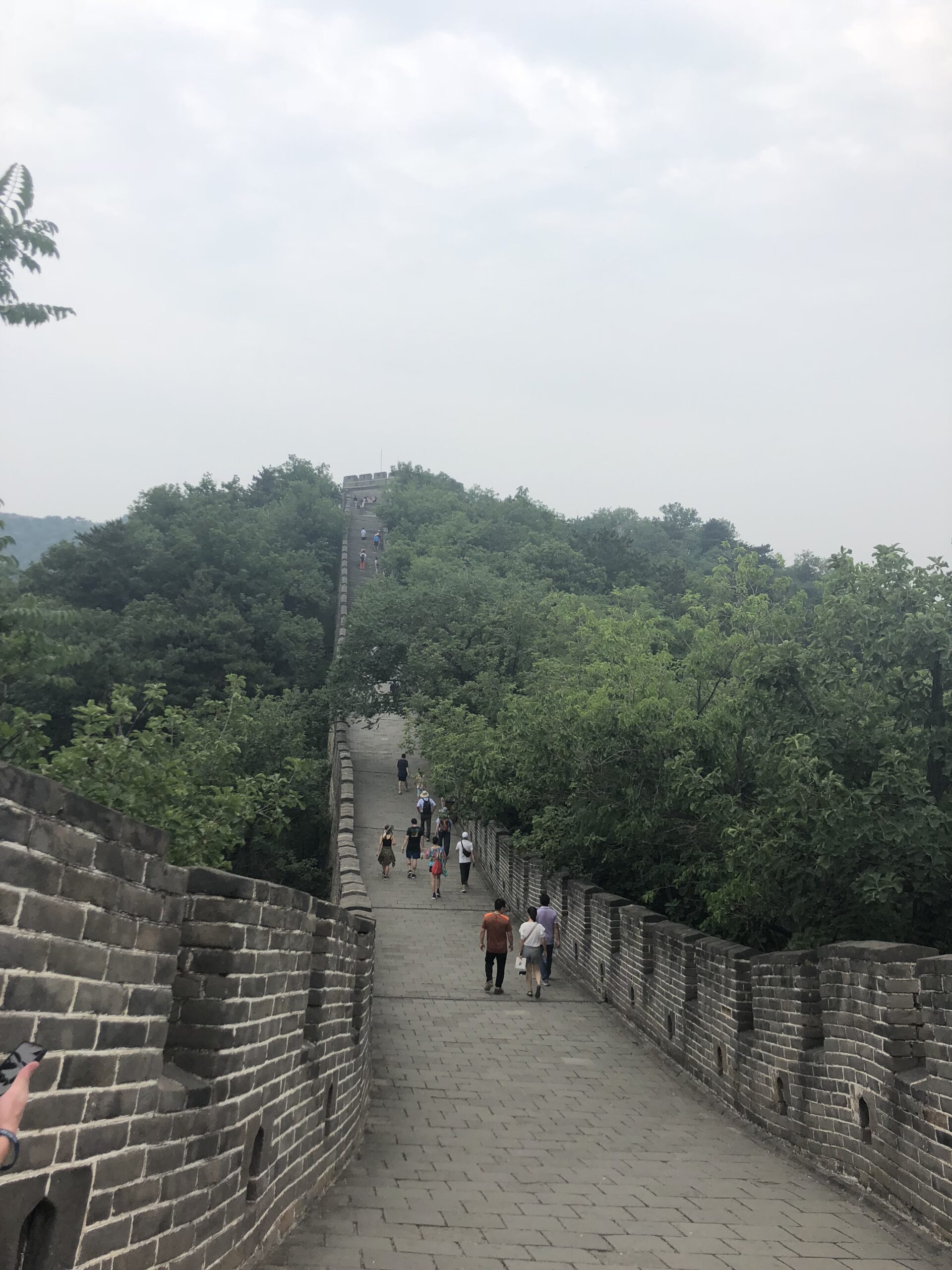
I am standing at the top of the Great Wall during my trip to China in the summer of 2018.

Author: Paige Goldberg (original photo)

Bibliography:

Waldron, Arthur. The Great Wall of China: From History to Myth. Cambridge Studies in Chinese History, Literature, and Institutions. Cambridge England: Cambridge University Press, 1990.

Bruce G. Doar. “The Rehabilitation –and Appropriation– of Great Wall Mythology”. China Heritage Quarterly, 7 (Sept. 2006). http://www.chinaheritagequarterly.org/articles.php?searchterm=007_meng.inc&issue=007

Inspiration from a Cat

Embrace challenges! I find myself always eager to push myself out of my comfort zone instead of taking the simple route to be successful. I love taking on new challenges because not only am I able to acquire new knowledge, but I find as if I am to gain additional experience that is beneficial in the long run. I find challenges to be exciting and I use them as a source of motivation both in and outside of the classroom. I feel also feel as if I am able to improve my self-confidence and skillset by taking part in more difficult tasks.

A white cat is grasping onto the tire of a bike and managing to hold onto the spokes.
http://growthmindsetmemes.blogspot.com/2015/11/english-embrace-challenges.html

css.php