Inkstones of East Asia

As inkstones were very prominent in East Asia, they served a great significance to the Qing. Inkstones are also referred to as ink-slabs and ink palettes (Ko). They are known as “a collectible object, a father’s gift to his school-bound son, a token of exchange among friends, and an inscriptional surface for encomiums” (3). Dorothy Ko’s powerful work of The Social Life of Inkstones explores inkstones as the subject of her research. While Dorothy became engaged in inkstones because of the fact she was interested in the gender of women and material culture, she is known as one of the most famous makers of inkstones as a women in the 18th century. Dorothy also got into inkstones because she realized that carving is not a tedious process and that she simply needs to create a piece that embodies beauty. Dorothy always tries out the art forms in which she writes about so it was important that she was capable of carving.

Dorothy discusses the importance of duan quarries and how they produce a stone good for grinding ink that doesn’t hurt the brush and is harder than the ink stick (Ko). Chinese writers and painters held the duan quarries to a high standard and it was known that they consisted of the best quality ink stones. Dorothy introduces Gu Erniang, the most famous ink stone maker of her day. Gu worked solely with men and was recognized because she was the only women that prospered in the field. Dorothy also emphasizes how it is “useful is to study the words carved on stones and the ink rubbings made of them—inkstone encomiums, printing blocks, and commemorative steles—as supplements to printed texts and manuscripts” (8). It is quite fascinating that some carvers use words and others don’t and that they can be differentiated by unique signature marks.
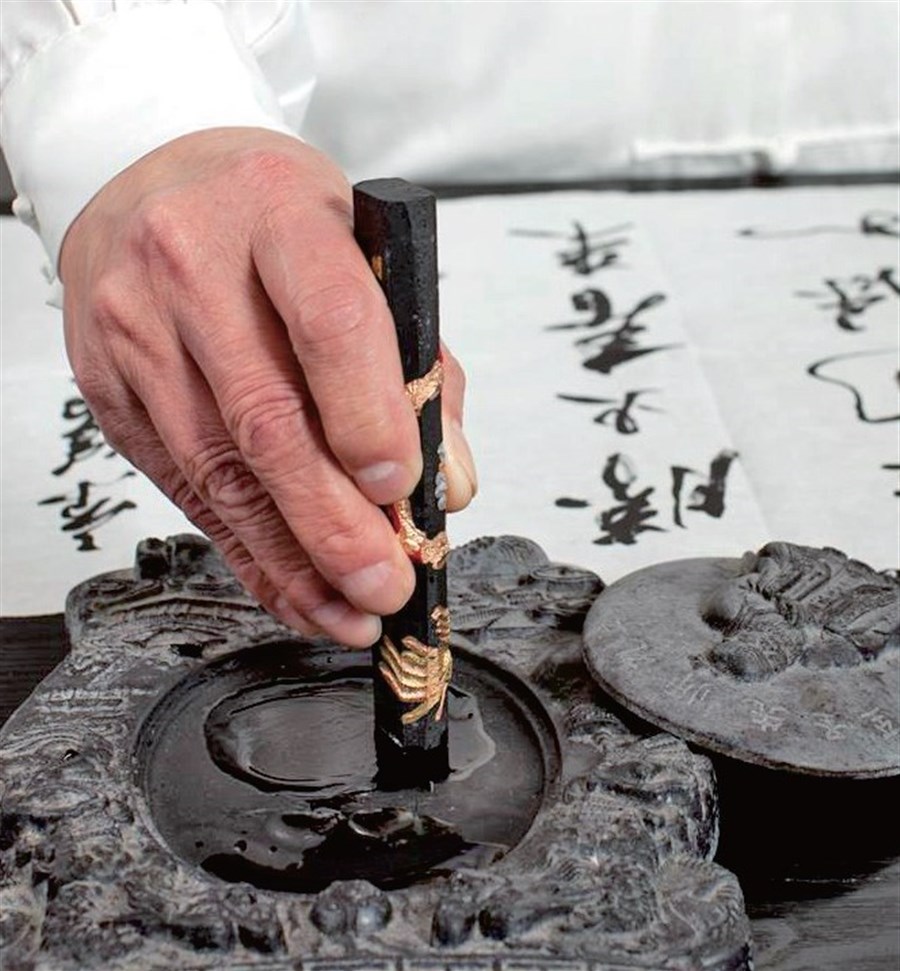
A Chinese scholar uses an inkstone to grind ink to complete his painting. The man is rubbing the inkstink in the water.
https://archive.shine.cn/sunday/now-and-then/A-stone-more-precious-than-gems/shdaily.shtml

Works Cited

Podcast: New Books in East Asian Studies, interview with Dorothy Ko, author of The Social Life of Inkstones. (appr. 1hr)

Ko, Dorothy. The Social Life of Inkstones : Artisans and Scholars in Early Qing China. A Study of the Weatherhead East Asian Institute Columbia University. Seattle: University of Washington Press, 2017. 
My Idea for the Final Project

I want to research further into the Chinese ornamental stone, jade, for my final project. My high school Mandarin teacher’s love for the gem inspired me to want to learn more about how its religious and spiritual meaning evolved. Jade is known for being very auspicious and representing good fortune as it was a common practice for monarchs to offer the gem to other leaders in order to establish a cordial relationship. In addition, elders would give children jade jewelry as a symbol of love and protection. As jade can symbolize good luck, my Mandarin teacher would give her seniors a gift of jade when they graduated from her program in order to provide them with her best wishes before heading off to college. I would always associate jade with a positive connotation and couldn’t wait to earn my very own piece of jade.

Although I am not sure if I specifically want to focus on the symbolic meaning of jade across various aspects, I know that I want to select a prominent piece of jade or two to analyze. I will be able to use the object I select as a source of gaining insight about the hidden meanings that exist. As jade dates back to the Shang Dynasty, I am intrigued as to how its meaning has transformed over time. I will be using Jade by Roger Keverne from the Trexler Library in order to learn more about specific pieces of jade that are essential to different areas of the world. I will also look into the resouce: Chinese jades from Han to Ch’ing. I think it would be interesting to explore how it is determined whether jade is truly real. We are often tricked by fake pieces of the gem and I am curious as to what specifically defines the gem and makes it real. I think it could also be interesting to investigate why jade is so important to the Chinese culture but not mined by ethnic people. I feel as if the topic of jade has endless possibilities as there are many existing objects of utility and pleasure, vessels used in the worship of the gods, as well as sculptures, that are made of jade. I believe that once I dive deeper into the text I will be able to further narrow my research.

Traditional Chinese Buildings and the Emperor’s Palaces and Gardens

The Summer Palace and the Forbidden City are essential monuments that serve a great significance on Chinese history. The Summer Palace was originally known as Yuanmingyuan and was built in the early 18th century. Yuangmingyuan was considered an individual garden, as well as a complex of combined gardens. While the main focus of the gardens consisted of their hills and lakes, there were also buildings featured in the landscape which “[were] designed to resemble scenes from the Jiangnan region, or Lower Yangzi Valley, from which China’s famous literati poets and painters hailed” (Li). As the emperors utilized the Summer Palace as a place of residence, ““Yuanmingyuan was [known as] a paradise on earth for the Qing emperors.” Yuangmingyuan can be translated in Mandarin characters as the “round (yuan 園) and bright (ming 明) garden (yuan 園)—or the Garden of Perfect Brightness” (Li). The Yongzheng emperor was responsible for expanding upon the garden. He left an additional garden, the Garden of Joyful Spring, to his mother. His son, Qianlong, added a third garden to the complex known as the Garden of Elegant Spring. The three gardens were eventually united to become Yuangmingyuan.

It is known that “Yuanmingyuan was at first a scenic retreat for the emperors who wished to escape the heat and formal obligations of the Forbidden City in Beijing” (Li). The Forbidden City took four years to build and is 720,000 square metres. The “Forbidden City complex was the beating heart of Beijing” (Hernandez). It consists of various materials, such as stones and timber. As the Forbidden City was known for hosting ceremonies for the imperial family, its reception halls can be found in the front, while the complexes located in the back consist of where the imperial family was housed. Entry into the Forbidden City was strictly restricted. It turned out that the “imperial system collapsed at the start of the 20th century and the Forbidden City, which had been home to emperors since 1420 and housed the world’s greatest collection of art treasures, was turned over to the public and transformed into the Palace Museum” (Arranz). Today, the fascinating Forbidden City is known as a national museum.

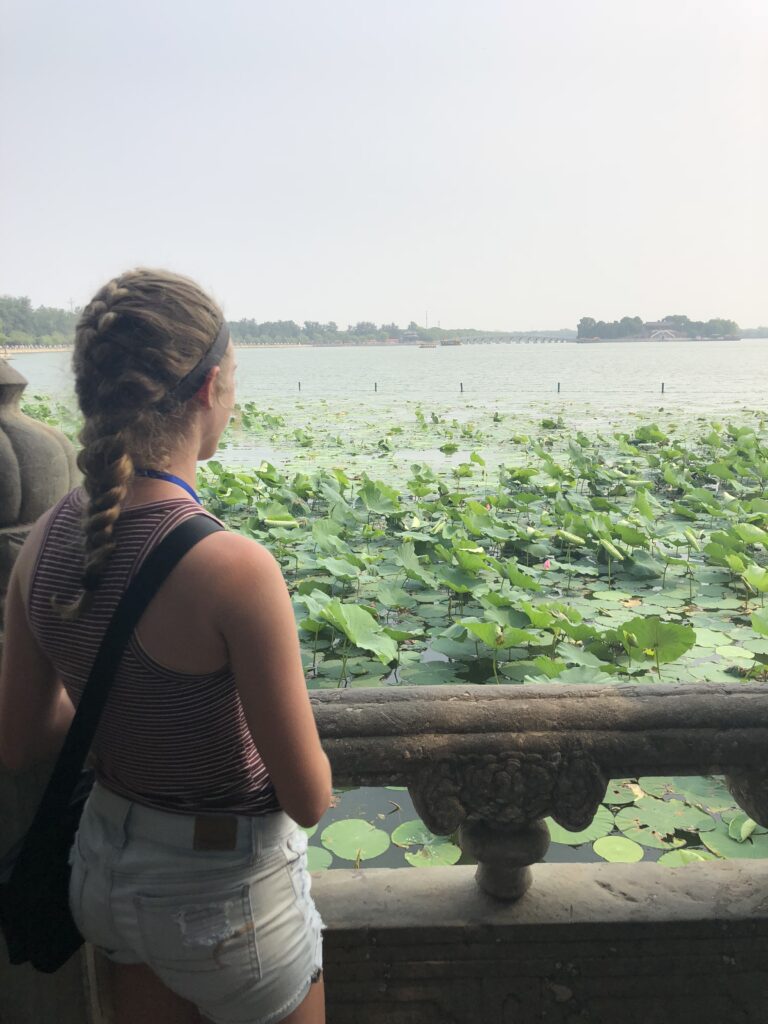
I am standing myself in front of a beautiful pond with leafs at the Summer Palace in China.

Author: Paige Goldberg (Original Photo)

Works Cited

Li, Lilian M. “The Garden of Perfect Brightness.” MIT Visualizing Cultures, 2012. 

Hernandez, Marco. “The Origins of Beijing’s Forbidden City.” South China Morning Post. May 29, 2018. https://multimedia.scmp.com/culture/article/forbidden-city/architecture/chapter_01.html?src=follow-chapter

Arranz, Adolfo. “How China’s Forbidden City Became the Palace Museum.” South China Morning Post. December 05, 2018

Reflection on Traditional Chinese Money

Traditional Chinese money could be interpreted as both objects and ideas. The two main functions of money are “to serve in payment, and to serve in the fulfillment of an obligation, whether of a commercial, fiscal, administrative, religious or social nature.” While the “fulfillment of a payment is usually quantitative, the fulfillment of an obligation is usually qualitative” (1). Money in early China took on various forms and differed amongst the dynasties. The Han Dynasty was known for using knife money which was employed before the time of the terracotta warriors. In addition, round coins were also casted during the Han dynasty. Interestingly, my classmate, Jialin, pointed out how they exhibit symbolism. The inner square of the coin represents the Earth, while the outer circle represents Heaven. The Tang dynasty used bolts of silk as payment, whereas the Jing dynasty used bolts of silk, as well as grains. Textiles were also commonly used as a form of currency exchange during the Han and Tang dynasties. Additionally, theYuan period used bank notes and print plates. The Ming dynasty used paper money. Paper money did not survive and was deemed worthless by 1430 (slides). As a result, they replaced paper money with the use of silver. Furthermore, the Qin and Han monetary systems were known as bi-metallic and consisted of gold and silver.

As coins are known to be the most common form of currency, “the act of issuing coinage can be seen as an assertion of political authority and the right to rule, as a means of improving or maintaining social and economic stability, and as a means of financial gain” (10). Although archeologists are known to be responsible for performing a lot of the work involving coins, it is often difficult to interpret the evidence of coins. For example, the wuzhu coin, which was for over 700 years in China, lacked any sort of a consistent identification. The fact that there is not much information about these coins differentiates them from the traditional Greek and Roman coins. The Greek and Romans were known for creating lifelike portraits and knew what every one of their emperors looked like. On the other hand, the Chinese did not have any images of emperors on their coins, or have any idea of what they looked like. Sometimes they use the same coins over hundreds of years. It is quite fascinating how the consistency, quality and purpose of coins have evolved as a form of currency throughout Chinese history.

Three Things I learned this week:

  1. Money can be interpreted as objects and ideas.
  2. Coins are manmade and durable. Other manmade money-objects include grain, textiles and feathers.
  3. Although it is difficult to interpret the evidence of coins, they are seen as a useful means of dating of a[n] [archaeological] site” (10).

Works Cited

Slides (Gdrive link)

Horesh, Niv. Chinese Money in Global Context : Historic Junctures between 600 BCE and 2012. Stanford, California: Stanford University Press, 2014. 

Wang, Helen. Money on the Silk Road: The Evidence from Eastern Central Asia to c. AD 800. London: British Museum Press, 2004.

Money on the “Silk Roads”

Although the definition of money is left open for interpretation, the etymology of the word “money” is responsible for determining the function in which it serves. While coins are a significant form of money, “a community in which coins are available does not necessarily exclude other forms of money, nor is the coinage in such a community necessarily the dominant form of money” (1). Coins are known for the fact that they are manmade and very durable. The authority of an individual coin can be determined from observing a mark typically found on a coin. While the names of coins are known for defining their physical appearance, this traditional process has continued to be carried out over time. As it can often be a challenge to date a specific coin, it is known that “rarer and later coin-types of more precise periods and locations of issue may offer more exact information, but, as Chinese coins often remained in circulation long after their official period of issue, they must always be interpreted in the context in which they were found” (2). Coins provide other challenges such as the fact that they are found in extensive amounts, were designed to be used in the afterlife, and that cultural and philosophical ideas can be equated to them. It is known that “during the period between the Han and the Tang dynasty, when central China was fragmented into many states, there were long periods without regular coin production” and that “other forms of money were also adopted, in particular grain and textiles, which had had a monetary function since ancient times” (4). Money could also be interpreted as objects and could perform functions such as textiles, feathers and grain (2). In addition, paper money was invented during the Han period. The currency of money and how it has evolved is an essential aspect of China’s history.

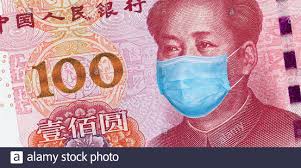
Yuan is the current form of money that is used in China today.
https://www.alamy.com/stock-photo/yuan-china-money-100.html

Works Cited

Slides (Gdrive link)

Horesh, Niv. Chinese Money in Global Context : Historic Junctures between 600 BCE and 2012. Stanford, California: Stanford University Press, 2014. 

Wang, Helen. Money on the Silk Road: The Evidence from Eastern Central Asia to c. AD 800. London: British Museum Press, 2004.

Reflection on the Textiles of Tang China

The beautiful textiles of Tang China are known for their artistic value and uniqueness. The raw materials in which the textiles consist of are known for differentiating the textiles into three categories in which “animal fibres include wool”, “silk [comes] from silk worms”, and “plant fibres can be culled from both domesticated and wild species of hemp, ramie, banana, cotton, [and] creeper vine” (5). While the production process varies, women were known to be responsible for making the textiles and weaving the cloth. This contributed to the dramatic increase in the income of women, which helped them gain a greater sense of respect.

As the cotton revolution was known for beginning in 1300 in China, technology had a major impact on assisting the production process and allowing for increased production. While the cost of the textiles derived from the production investments in certain fabrics, the value of the textiles were defined by their color, intricate patterns, inclusion of detail, and their style in comparison to the time of year. The type of weave and the fibers define a specific article of clothing and differ depending on the region in which they originate. As the value of the textiles are what truly set them apart, they also vary depending on whether they are more simple or complex. While the fanciest textiles were woven in silk, “emperor as the sage-king received silks as tribute and tax payment, and redistributed them among his supporters” (4). Bolts of silk were known as a form of currency. The more simple textiles were known to work better for currency and were used the most often for exchanges. Furthermore, the social order of the dynasty directly correlated with the textiles.

I found it very interesting that one of my classmates pointed out that China was the first to create a textile industry, but the practice was adopted in other countries in later years. America, as well as a majority of Europe, were known to follow suit of the Tang Dynasty.

Three things I learned this week:

  1. The dry climate in northwest China was known for contributing to the textiles because silk was used as currency in the Tang empire.
  2. While textiles varied in whether they were more simple or complex, the simple textiles were more common and numerous and were “better suited to serve as money on the Silk Road” (2).
  3. Women carried out most of the production of the textiles and as a result, their incomes rose dramatically.

Works Cited

Slides (Gdrive link)

Sheng, Angela. “Determining the Value of Textiles in the Tang Dynasty: In Memory of Professor Denis Twitchett (1925-2006)”. Journal of the Royal Asiatic Society, Third Series, 23, no. 2 (2013): 175-95. 

Xue, Meng Melanie. Cotton Textile Production in Medieval China Unravelled the Patriarchy, Aeon, June 27, 2018. https://aeon.co/ideas/cotton-textile-production-in-medieval-china-unravelled-patriarchy

Textiles of Tang China

The textiles of Tang China have existed over a long period of time and have created numerous pieces of work known for their beauty and decor. Aspects of the textiles that are easily discovered by the human eye consist of color, pattern, intricacy and the level of workmanship. While the textiles have different values, they “served as money on the Silk Road” in which “simpler textiles were better suited to serve as money” and “more elaborate textiles were better suited to other types of exchanges” (2). The simplicity of the textiles depended on the type of loom used and binding structure of the tabby. The more complex textiles featured twill, satin, gauze and compound weaves and allowed for repeated motifs, as a result of the more complex looms employed. The fancy textiles were set aside by the fact that their patterns were more intricate and dyed and they were often woven in silk. It is known that “redistributing simple textiles and fancy silks substantiated social relations between the emperor and his subjects, thereby ensuring social order” (4). While simper textiles are more widespread and numerous, the more complex woven textiles were hand woven, required more labor and costed more in price. Furthermore, textile density “can determine the true quality of the production. The density reflects the quantity of original fibre used, the equipment with which it was made and the manual dexterity and expertise required to design and produce it” (7). Various components of the textiles are known for differentiating their complexity, quality and monetary value.

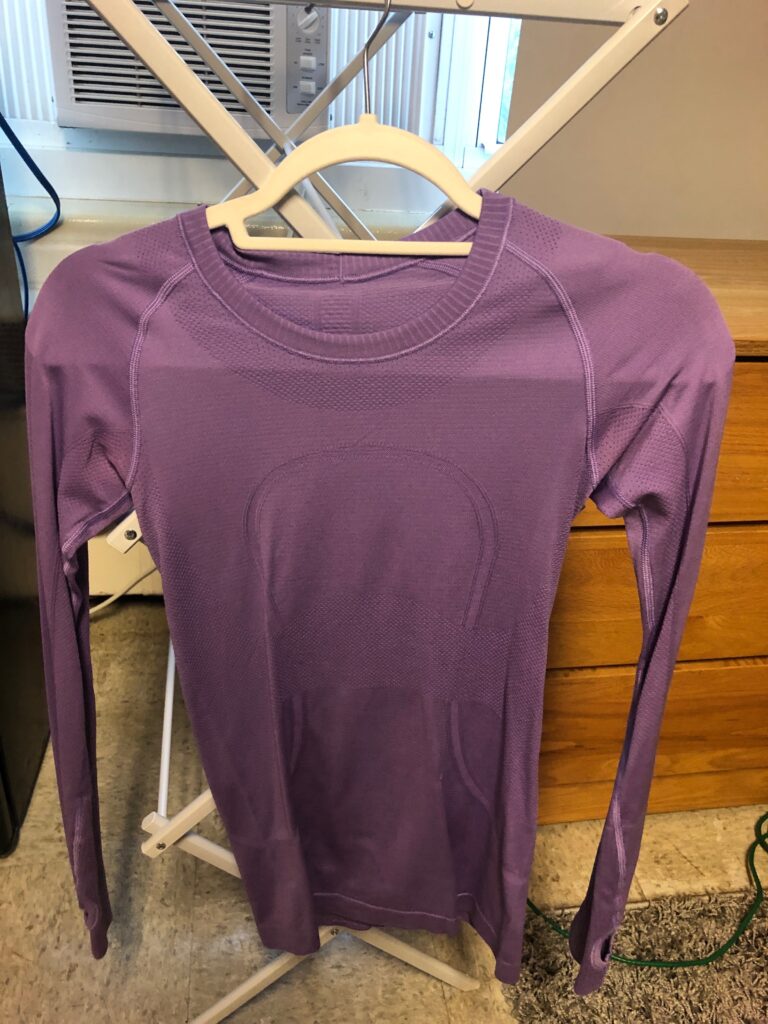
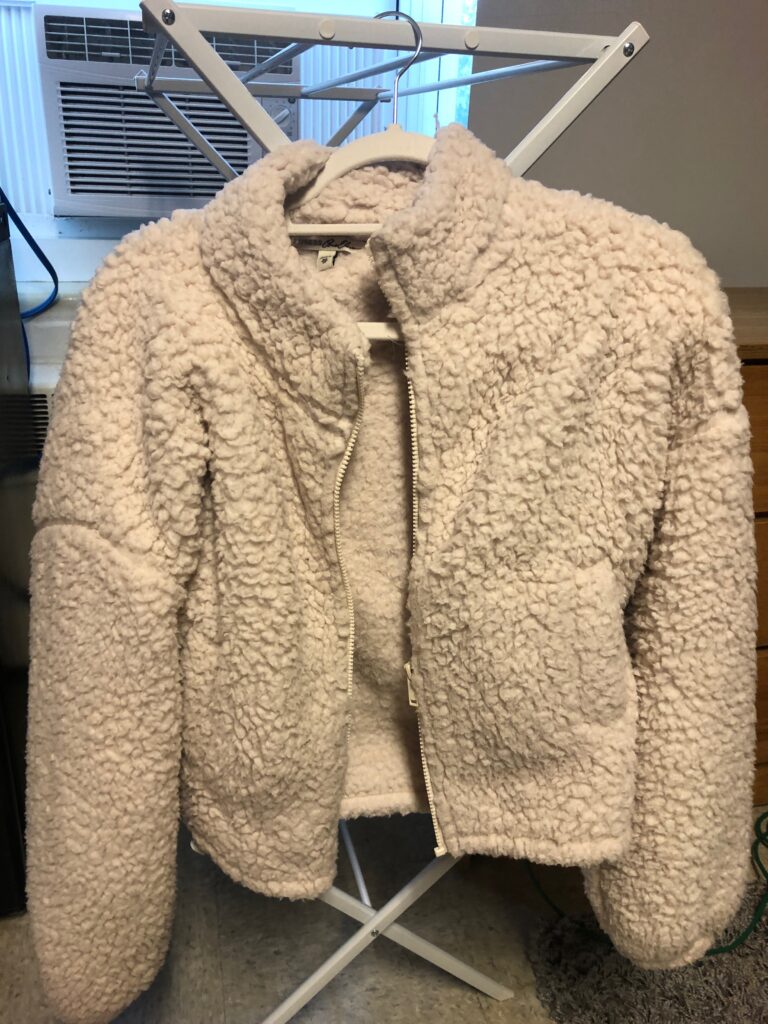
As I looked through my own wardrobe, I found my sherpa jacket which resembles wool lined clothing worn by tribes. This jacket is a sherpa fleece made of polyester, consisting of a blend of cotton and synthetic fibers. The sherpa jacket is a stretch knit polyester fleece fabric that is warm but lightweight and is typically worn in the Fall and Winter. It is known to be very stylish as it is often worn oversized. I got my sherpa jacket from Pacsun and it was made in China. I believe that the production process of the jacket was most likely a bit intricate because of the fact that it is a unique and trendy piece of clothing. In addition, I found my long-sleeve Lulu Lemon shirt in my wardrobe. This shirt is made of nylon and Lycra and the fabric is stretchy. It is good for performing high intensity exercise because of the fact that the fabric is woven to offer freedom of movement and the ability to stretch. The fabric is seamlessly constructed with yarn so people can travel far distances and exercise to their greatest potential. I would guess that this piece of clothing was more challenging to design as it sold at high prices.

A purple long-sleeve Lulu Lemon athletic shirt.
Author: Paige Goldberg (original photo)
A white fuzzy zip-up sherpa jacket.
Author: Paige Goldberg (original photo)

Works Cited

Slides (Gdrive link)

Sheng, Angela. “Determining the Value of Textiles in the Tang Dynasty: In Memory of Professor Denis Twitchett (1925-2006)”. Journal of the Royal Asiatic Society, Third Series, 23, no. 2 (2013): 175-95. 

Reflection on the Material World of Tang China

The prominent Tang empire that connected across the Eurasian world is known for its great involvement in religion and art. The capital of the dynasty consisted of numerous temples of not only the Buddhist faith, but of other faiths that were commonly practiced in Central Asia, such as Zoroastrianism and Nestorianism. While many of the empire’s most popular sites include Buddhist moral paintings and statues, a lot of the paintings designed feature Kings, as well as ordinary rituals of the time period. As it is commonly known that Buddhism evolved during the Tang Dynasty, many of the paintings hightlighted the theme of the before and after life. In addition, many artifacts made the dynasty very unique. Archeologists founded the currency of silver and gold coins that served useful purposes. These coins also provided insight that the “Turfan lay halfway between the Iranian and Chinese worlds” and that during “the Silk Road trade, Turfan absorbed many foreign immigrants, none more numerous than the Sogdians who came from Samarkand” (10). As the Turfan was known as an important city along the Silk Road, a significant trade network, it was also known as the best place to adopt a foundation of the Chinese language and begin learning it. While it is a common practice of the Turfan to use discarded documents to make clothing and other items for the deceased, when a massive campaign was launched to raise China’s economy, the archaeologists had to reach quotas consisting of thousands of artifacts. Furthermore, the Tang Dynasty was also known for its incorporation of documentation that was not only used for religious purposes, such as Buddhist spells for healing and intriguing stories, but for contracts, loans, taxes and deaths. The history records of the Tang dynasty are known for being the most voluminous compared to other dynasties. As the dynasty was recognized for its artistic and cultural influences, it is also known for its territorial expansion and economic development.

Three things I learned this week:

  1. Buddhism flourished during the Tang dynasty and many of the popular sites of the time period consisted of Buddhist moral paintings and statues.
  2. The Silk Road was a very influential trade network of the time period that was located between Tang and Central Asia.
  3. As the “Tang state was a highly bureaucratic regime,” its history records are known as being the most voluminous compared to other dynasties (2).

Works Cited

D’Haeseleer, Tineke. “Tang China (618-907).” In Bloomsbury Encyclopedia of the Global Middle Ages, edited by Erik Hermans. Arc Humanities Press, Bloomsbury Publishing, 2019. 

Hansen, Valerie. The Open Empire : A History of China to 1800. Second ed. New York: W.W. Norton & Company, 2015.

Slide deck (Gdrive link)

Hansen, Valerie. The Silk Road : A New History with Documents. New York: Oxford University Press, 2017

The Library Cave of Tang China

While the Tang period lasted from 618 until 907, it is known that the ethnic Han Chinese consisted of a majority of the population and that the dynasty’s territory spread throughout mainland China. Given that Buddhism was very prominent during this time period, the Emperor of the dynasty, Xuanzong, was known as a 7th century month. As the “Tang state was a highly bureaucratic regime,” its history was closely documented and scholar-officials have produced lots of written materials that have influenced the “development of Tang studies” (2). The documents have noted many essential aspects of Tang China and the “largest cache of such documents comes from the so-called ‘Library Cave’ in the Mogao Caves near Dunhuang” which is a “site of Buddhist worship in easter Xinjiang” (2). The documents provide insight into the historical significance of the empire, as well as its social structure, economic standing and political influences.

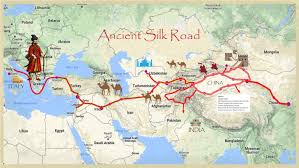
While Tang China is known for having complex foreign relations, the Silk Road serves a great importance in the trade network that exists between Tang and Central Asia. In The Silk Road : A New History with Documents, “Xuanzang’s itinerary underscores the important place of Turfan on the Silk Road. Along with Kucha, it was one of the largest cities in the Western Regions” (5). Xuanzang’s trip was so unique in that he traveled alone because most typically travel in caravans along the northern route. The population of Turfan itself consisted of migrants from both China and Sogdiana. “When the southern route fell into disuse after 500, many travelers opted for the northern route that went through Turfan” (2). Turfan was a popular place for settlement because the migrants had a desire to learn Chinese. Furthermore, the Turfan discarded paper and official documents to make clothing and items for the dead and graveyards consisted of numerous documents. The documents, as well as coins, contributed to the establishment of Turfan’s trading partner as the Iranian world. In addition to trading, the “Sogdians living in Turfan pursued a wide variety of occupations including cultivating the land, serving as soldiers, running inns, painting, working leather, and selling iron goods” (10). They also employed the common Chinese burial practices.

The Silk Road is a prominent network of trade routes that connects East Asia and Southeast Asia.
https://silkroadfestival.org/

Works Cited

Slide deck (Gdrive link)

D’Haeseleer, Tineke. “Tang China (618-907).” In Bloomsbury Encyclopedia of the Global Middle Ages, edited by Erik Hermans. Arc Humanities Press, Bloomsbury Publishing, 2019.

Hansen, Valerie. The Silk Road : A New History with Documents. New York: Oxford University Press, 2017.(PDF)

Reflection on the Tombs of Early China

As the tombs of Early China hold such a historical and artistic significance on China’s materialistic culture, it shows the extent in which the dead is respected and provided for after death. While the tombs are known for consisting of anthropomorphic and zoomorphic miniatures, as well as architectural models, the tombs were filled will items that the spirits would need after death. As the objects in the tombs were referred to as “‘spirit articles’ made specifically for the afterlife,” they often consisted of various paintings and sculptures (10). The reason that pottery was incorporated into the tombs was because it could be mass produced and was known for its high quality, as well as the fact that the imperial family lacked any sophisticated technology. In reality, the burial objects were not intended to hold a particular function to the living and instead they were simply pleased by their aesthetics.

The three factors that the figurines were influenced by were location, time and quantity. They are known as representations, or microorganisms, of the different aspects of the society in ancient times. Furthermore, the material used on each figurine was determined by one’s social class. The figurines of the imperial family consisted of clay and anyone else that was considered below them in the hierarchy used wood. The human figurines typically included servants and performers that would fulfill the role of assisting and accompanying the dead. In addition, the architectural models were typically ceramic and wooden vehicles, such as chariots, oxcarts and boats.

The tombs of Early China are known to be magical spaces that move objects between the two worlds and act as a counter-image in the world of the dead. As the figurines and models are known for taking the place of performing human sacrifices, the number of instances of human sacrifice has decreased over time and the objects inside of the tombs has dramatically increased.

Three things I learned this week:

  1. The Terracotta Army was located alongside the tomb of the First Emperor of Qin and was part of a massive underground city.
  2. The tombs of Early China consisted of anthropomorphic and zoomorphic miniatures, as well as architectural models that were essential to the spirits in the afterlife.
  3. The figures depended upon the three factors of location, time and quantity.

Works Cited

Hung, Wu. The Art of the Yellow Springs: Understanding Chinese Tombs. London: Reaktion Books, 2010. (ebook Trexler)

Other Tombs of Early China-  Selbitschka, Armin. “Miniature Tomb Figurines and Models in Pre-Imperial and Early Imperial China: Origins, Development and Significance.” World Archaeology 47, no. 1 (2015): 20-44. (article in Trexler)

css.php