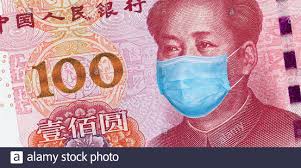
Although the definition of money is left open for interpretation, the etymology of the word “money” is responsible for determining the function in which it serves. While coins are a significant form of money, “a community in which coins are available does not necessarily exclude other forms of money, nor is the coinage in such a community necessarily the dominant form of money” (1). Coins are known for the fact that they are manmade and very durable. The authority of an individual coin can be determined from observing a mark typically found on a coin. While the names of coins are known for defining their physical appearance, this traditional process has continued to be carried out over time. As it can often be a challenge to date a specific coin, it is known that “rarer and later coin-types of more precise periods and locations of issue may offer more exact information, but, as Chinese coins often remained in circulation long after their official period of issue, they must always be interpreted in the context in which they were found” (2). Coins provide other challenges such as the fact that they are found in extensive amounts, were designed to be used in the afterlife, and that cultural and philosophical ideas can be equated to them. It is known that “during the period between the Han and the Tang dynasty, when central China was fragmented into many states, there were long periods without regular coin production” and that “other forms of money were also adopted, in particular grain and textiles, which had had a monetary function since ancient times” (4). Money could also be interpreted as objects and could perform functions such as textiles, feathers and grain (2). In addition, paper money was invented during the Han period. The currency of money and how it has evolved is an essential aspect of China’s history.
Works Cited
Slides (Gdrive link)
Horesh, Niv. Chinese Money in Global Context : Historic Junctures between 600 BCE and 2012. Stanford, California: Stanford University Press, 2014.
Wang, Helen. Money on the Silk Road: The Evidence from Eastern Central Asia to c. AD 800. London: British Museum Press, 2004.
