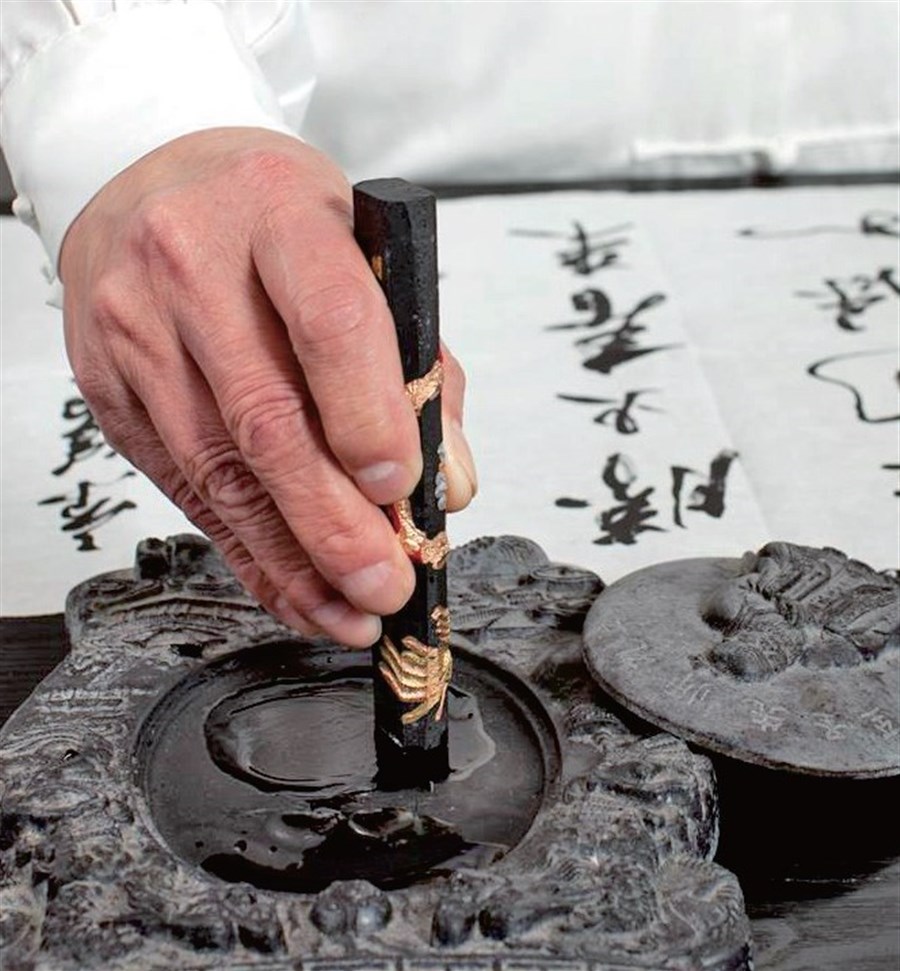
As inkstones were very prominent in East Asia, they served a great significance to the Qing. Inkstones are also referred to as ink-slabs and ink palettes (Ko). They are known as “a collectible object, a father’s gift to his school-bound son, a token of exchange among friends, and an inscriptional surface for encomiums” (3). Dorothy Ko’s powerful work of The Social Life of Inkstones explores inkstones as the subject of her research. While Dorothy became engaged in inkstones because of the fact she was interested in the gender of women and material culture, she is known as one of the most famous makers of inkstones as a women in the 18th century. Dorothy also got into inkstones because she realized that carving is not a tedious process and that she simply needs to create a piece that embodies beauty. Dorothy always tries out the art forms in which she writes about so it was important that she was capable of carving.
Dorothy discusses the importance of duan quarries and how they produce a stone good for grinding ink that doesn’t hurt the brush and is harder than the ink stick (Ko). Chinese writers and painters held the duan quarries to a high standard and it was known that they consisted of the best quality ink stones. Dorothy introduces Gu Erniang, the most famous ink stone maker of her day. Gu worked solely with men and was recognized because she was the only women that prospered in the field. Dorothy also emphasizes how it is “useful is to study the words carved on stones and the ink rubbings made of them—inkstone encomiums, printing blocks, and commemorative steles—as supplements to printed texts and manuscripts” (8). It is quite fascinating that some carvers use words and others don’t and that they can be differentiated by unique signature marks.
Works Cited
Podcast: New Books in East Asian Studies, interview with Dorothy Ko, author of The Social Life of Inkstones. (appr. 1hr)
Ko, Dorothy. The Social Life of Inkstones : Artisans and Scholars in Early Qing China. A Study of the Weatherhead East Asian Institute Columbia University. Seattle: University of Washington Press, 2017.
