The textiles of Tang China have existed over a long period of time and have created numerous pieces of work known for their beauty and decor. Aspects of the textiles that are easily discovered by the human eye consist of color, pattern, intricacy and the level of workmanship. While the textiles have different values, they “served as money on the Silk Road” in which “simpler textiles were better suited to serve as money” and “more elaborate textiles were better suited to other types of exchanges” (2). The simplicity of the textiles depended on the type of loom used and binding structure of the tabby. The more complex textiles featured twill, satin, gauze and compound weaves and allowed for repeated motifs, as a result of the more complex looms employed. The fancy textiles were set aside by the fact that their patterns were more intricate and dyed and they were often woven in silk. It is known that “redistributing simple textiles and fancy silks substantiated social relations between the emperor and his subjects, thereby ensuring social order” (4). While simper textiles are more widespread and numerous, the more complex woven textiles were hand woven, required more labor and costed more in price. Furthermore, textile density “can determine the true quality of the production. The density reflects the quantity of original fibre used, the equipment with which it was made and the manual dexterity and expertise required to design and produce it” (7). Various components of the textiles are known for differentiating their complexity, quality and monetary value.
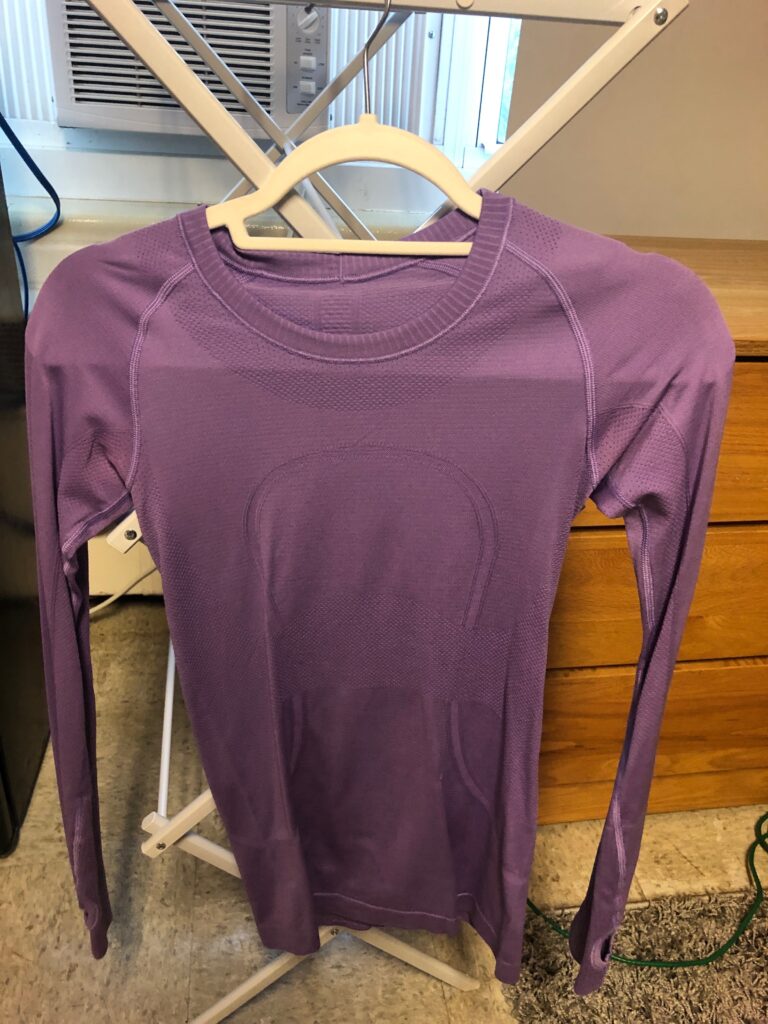
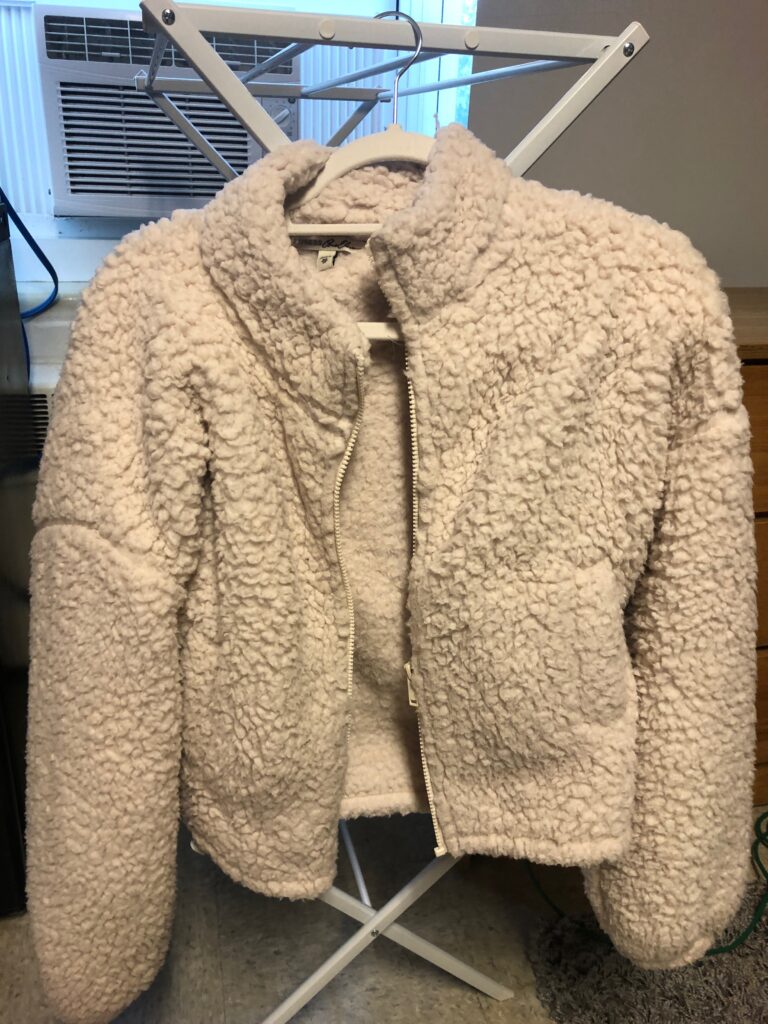
As I looked through my own wardrobe, I found my sherpa jacket which resembles wool lined clothing worn by tribes. This jacket is a sherpa fleece made of polyester, consisting of a blend of cotton and synthetic fibers. The sherpa jacket is a stretch knit polyester fleece fabric that is warm but lightweight and is typically worn in the Fall and Winter. It is known to be very stylish as it is often worn oversized. I got my sherpa jacket from Pacsun and it was made in China. I believe that the production process of the jacket was most likely a bit intricate because of the fact that it is a unique and trendy piece of clothing. In addition, I found my long-sleeve Lulu Lemon shirt in my wardrobe. This shirt is made of nylon and Lycra and the fabric is stretchy. It is good for performing high intensity exercise because of the fact that the fabric is woven to offer freedom of movement and the ability to stretch. The fabric is seamlessly constructed with yarn so people can travel far distances and exercise to their greatest potential. I would guess that this piece of clothing was more challenging to design as it sold at high prices.
Works Cited
Slides (Gdrive link)
Sheng, Angela. “Determining the Value of Textiles in the Tang Dynasty: In Memory of Professor Denis Twitchett (1925-2006)”. Journal of the Royal Asiatic Society, Third Series, 23, no. 2 (2013): 175-95.
